
Hair Transplant for Women with a High Forehead: Surgical Aesthetic Feminization
Home » Women High Forehead – Surgical Plan
Yes, hair transplant is a highly effective and permanent surgical remedy to restore a receded or lower a naturally high hairline in women. However, its success is entirely dependent on a correct medical diagnosis. The procedure is suitable for specific, stable conditions but can fail or cause harm if performed for inappropriate causes like active scarring alopecia.
 Sara’s Comment:
A high hairline can impact a woman’s facial harmony and confidence. Hair transplant is a permanent solution for many women, but candidacy depends on the underlying cause. While effective for genetic pattern loss, traction alopecia, and natural high hairlines, it is contraindicated for active skin conditions. A successful outcome should focus on creating a soft, natural feminine hairline.

Understanding the root cause is the first step toward a correct treatment plan. The etiology falls into three broad categories: genetic, reactive, and inflammatory.
Female Pattern Hair Loss (Androgenetic Alopecia): The most common cause. Thinning often begins on the crown and part line, but can include frontal hairline recession, especially with a strong family history.
Naturally High Hairline (Congenital): A birth characteristic, not hair loss. Becomes a cosmetic concern when it disrupts facial proportions.
Genetic Hairline Shape: An inherited high or M-shaped hairline that a patient may wish to soften and feminize.
Traction Alopecia: Caused by prolonged tension from tight hairstyles (ponytails, braids, extensions). Transplant is highly effective once the traumatic styling is permanently stopped and scarring is minimal.
Hormonal Imbalance: Shifts from menopause, PCOS, or thyroid disorders can cause diffuse thinning. Surgery is only considered after the hormonal imbalance is medically stabilized.
Nutritional Deficiencies & Crash Dieting: Deficiencies in iron, protein, or key vitamins can trigger shedding. The underlying deficiency must be corrected first before assessing transplant candidacy.
Stress-Induced Telogen Effluvium: Severe stress pushes hair follicles into a shedding phase. This is almost never a primary reason for surgery unless it unmasks or transitions into stable underlying pattern loss.
Frontal Fibrosing Alopecia (FFA): A primary scarring alopecia seen typically in postmenopausal women. It causes a band-like frontal hairline recession. Hair transplant is generally contraindicated as the autoimmune inflammatory process can destroy transplanted grafts and surgery may worsen the condition. Early medical management is critical.
Chemical Damage: Harsh dyes, relaxers, or bleaches can cause breakage and follicle weakening. This is rarely a sole indication for transplant unless it has resulted in permanent scarring.
Candidacy is determined by a medical diagnosis, not just the aesthetic desire. Here is a clear breakdown:
Stable Female Pattern Hair Loss (FPHL): With good donor density.
Established Traction Alopecia: Where the causative styling has ceased and the scalp shows minimal scarring.
Congenitally High or Undesired Genetic Hairline Shape: For purely aesthetic feminization.
Hormonal hair loss only after endocrine treatment has normalized levels.
Hair loss from nutritional deficiencies only after deficiencies are corrected and loss pattern is stable.
Chronic Telogen Effluvium that has transitioned to a stable, patterned state.
Active Frontal Fibrosing Alopecia (FFA) or other Scarring Alopecias: Absolute contraindication due to poor graft survival and risk of disease exacerbation.
Active, Diffuse Shedding from any unresolved medical cause (thyroid, iron deficiency, acute stress).
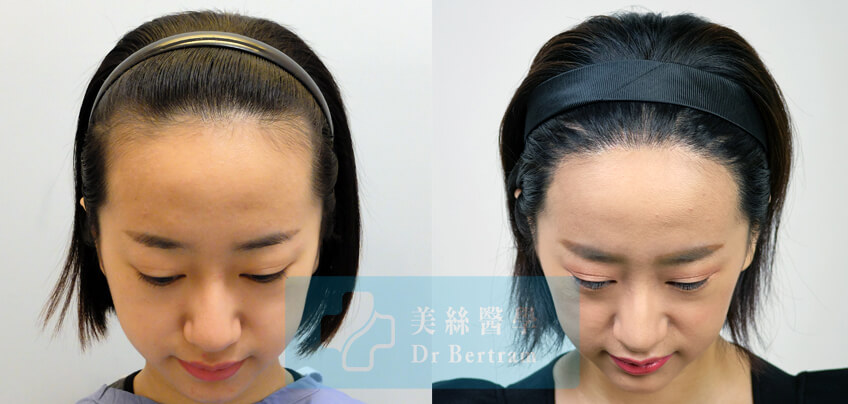
The objective is to restore facial balance using principles of aesthetic proportion, such as the Golden Ratio (Rule of Thirds). The surgical plan is customized to:
Lower the hairline to improve forehead-to-face ratio.
Fill in fronto-temporal recessions (the “corners”) to soften an M-shaped pattern.
Reshape the contour into a softer, rounded, irregular feminine hairline.
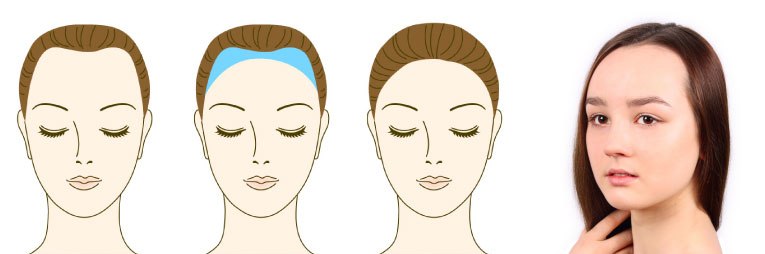
We reject a templated approach. Our Female Hairline Extension Technique is based on the principle that your ideal hairline is an extension of your unique native pattern.
Personalized Design: We analyze your facial structure, existing hair flow, cowlicks, and parting side. The design follows and extends your natural hairline forward 1–2 cm.
Strategic Reframing: We focus on meticulously refilling the fronto-temporal corners to eliminate masculine angles, ensuring seamless integration with your temporal hair.
Preservation of Identity: Natural features like a subtle widow’s peak or hair mounds are incorporated, not erased, for a result that looks intrinsically yours.
Peer-Recognized: This methodology was presented at the ISHRS Annual Meeting (2013) and published in the ISHRS FORUM Medical Journal.
Graft Count: Typically 1,800 to 2,400 grafts (approximately 2,400–4,000 individual hairs) are sufficient for significant feminization of the frontal frame.
Sessions: Most patients achieve their goal in one session. A minor touch-up may be discussed for optimal density.
Technique Choice: FUE: Suitable for patients who prefer a shaven donor area or wear very short hair.
Adjuvant Therapy: While transplanted hairs are permanent, we may recommend topical/minoxidil or oral medications to protect non-transplanted native hair from future progression of female pattern loss.
Diagnosis is Paramount: A hair transplant can successfully treat a high forehead caused by Female Pattern Hair Loss, stable Traction Alopecia, or congenital high hairlines. It is contraindicated for active scarring alopecias like Frontal Fibrosing Alopecia (FFA).
Feminization is an Art & Science: The goal is to create a soft, irregular, and proportionally balanced hairline that appears as a natural extension of your existing hair pattern.
Technique is Tailored: FUE is now the preferred technique for women as it avoids the need to leave a linear scar in the the donor area, and the harvested areas can easily be concealed by existing long hair.
Permanent Results, Ongoing Care: Transplanted hairs are permanent and do not require medication to survive. However, adjuvant medical therapy is often recommended to halt the progression of underlying genetic hair loss in other areas.
Physician-Led Design is Critical: Our Female Hairline Extension Technique emphasizes a custom design based on your facial anatomy and native hair growth patterns, ensuring natural, undetectable results.
Determining if you are a candidate starts with separating treatable conditions from medical contraindications. Send clear photos of your hairline and donor area (back and sides of scalp) for a free preliminary medical review. Our doctor will assess the likely cause and advise if a formal in-person consultation is appropriate to discuss a personalized surgical plan for hairline feminization.
Individual results vary. Hair transplant carries standard surgical risks, including bleeding, infection, and scarring. A thorough in-person medical assessment is required to confirm candidacy, diagnose the cause of hair loss, and discuss realistic outcomes. This information is for educational purposes only.

Images & Information shown are for reference only
Information on this website is provided for general educational purposes only and does not constitute personalized medical advice. It is not intended to promote our service or imply superiority over another.
Individual results in hair restoration vary significantly and no outcome can be guaranteed. The before-and-after images shown represent possible results — not promises. We recommend seeking independent medical advice to discuss your options … Read More
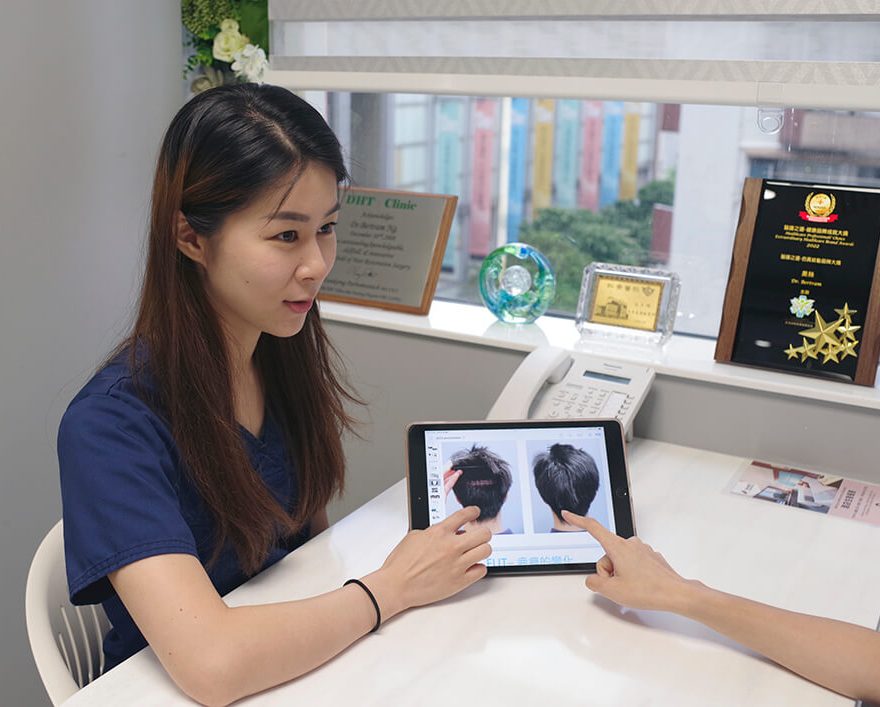
Pre-Consultation Review
If you want to get a personalized answer from our medical team, you can reach us using this form here. We will cantact you as soon as possible.
Our practice adheres to guidelines established by leading international organizations in Hair Restoration.
International Society of Hair Restoration Surgery is the leading global medical association that establishes international practice standards and patient safety protocols.
The American Board of Hair restoration Surgery represents the highest standard. To maintain rigorous certification requirements the physician must demonstrate surgical expertise.
Worls FUE InstituteI serves as the premier educational body focused exclusively on Follicular Unit Extraction methodology. The institute ensures consistent application of safe FUE.

