
FUE for Stable Vitiligo: Repigmentation Through Melanocyte Stem Cell Transfer
Home » Our Innovation – Treating Vitiligo With Hair Follicles
Yes. For patients with stable, localized vitiligo, transplanting individual hair follicles can effectively repigment the white patches. The follicles act as a reservoir of melanocyte stem cells, which migrate from the transplanted hair to the surrounding depigmented epidermis, gradually restoring natural skin color without the need for complex cellular grafting techniques.

Transplanting healthy hair follicles into stable vitiligo patches can induce lasting skin repigmentation by transferring melanocyte stem cells from the follicle’s outer root sheath. Our published, long-term research demonstrates that this surgical technique, utilizing refined FUE, offers a precise, scar-minimizing treatment for localized vitiligo, with remission documented up to 7 years post-procedure.
Yes. For patients with stable, localized vitiligo, transplanting individual hair follicles can effectively repigment the white patches. The follicles act as a reservoir of melanocyte stem cells, which migrate from the transplanted hair to the surrounding depigmented epidermis, gradually restoring natural skin color without the need for complex cellular grafting techniques.
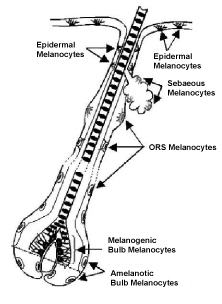
The treatment leverages distinct populations of melanocytes (pigment cells) within a hair follicle.
The Key Cells: The critical cells are the amelanotic melanocytes in the outer root sheath (ORS), particularly in the “bulge” region. These cells serve as a stem cell reservoir.
The Process: When transplanted into vitiligo-affected skin, these ORS melanocytes migrate upward to the epidermis, mature, and begin producing pigment, creating expanding islands of repigmentation around each graft.
Immunological Advantage: The hair follicle is an immunologically privileged site. These transplanted melanocytes may be less susceptible to the autoimmune attack that causes vitiligo, promoting sustained remission.
The protocol adapts precision hair transplantation techniques for dermatological therapy.
Donor Harvesting: Healthy, pigmented follicles are harvested via FUE (Follicular Unit Extraction) from the scalp, leaving only micro-dot scars.
Graft Preparation: Follicles are carefully prepared, often as single-hair grafts, ensuring the critical middle third (containing the ORS and bulge) is intact.
Recipient Site Creation & Implantation: Tiny sites are created within the vitiliginous patch using fine needles. Grafts are inserted at a low density (approximately 15 grafts per cm²) to allow for radial repigmentation.
Patient selection is critical for success, mirroring principles for surgical vitiligo therapies.
Stability is Mandatory: The vitiligo must be stable for at least 2 years with no new or expanding lesions.
Localized Disease: Best for focal or segmental vitiligo on cosmetically sensitive areas (face, neck, hands).
Realistic Expectations: Patients must understand it induces gradual, perifollicular repigmentation over months, not immediate full coverage.
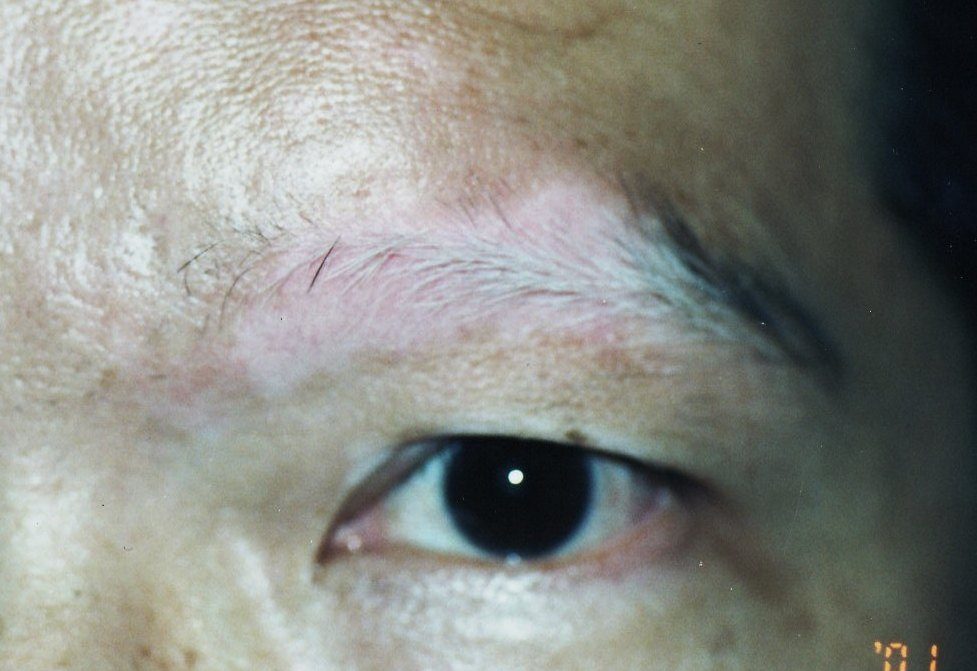
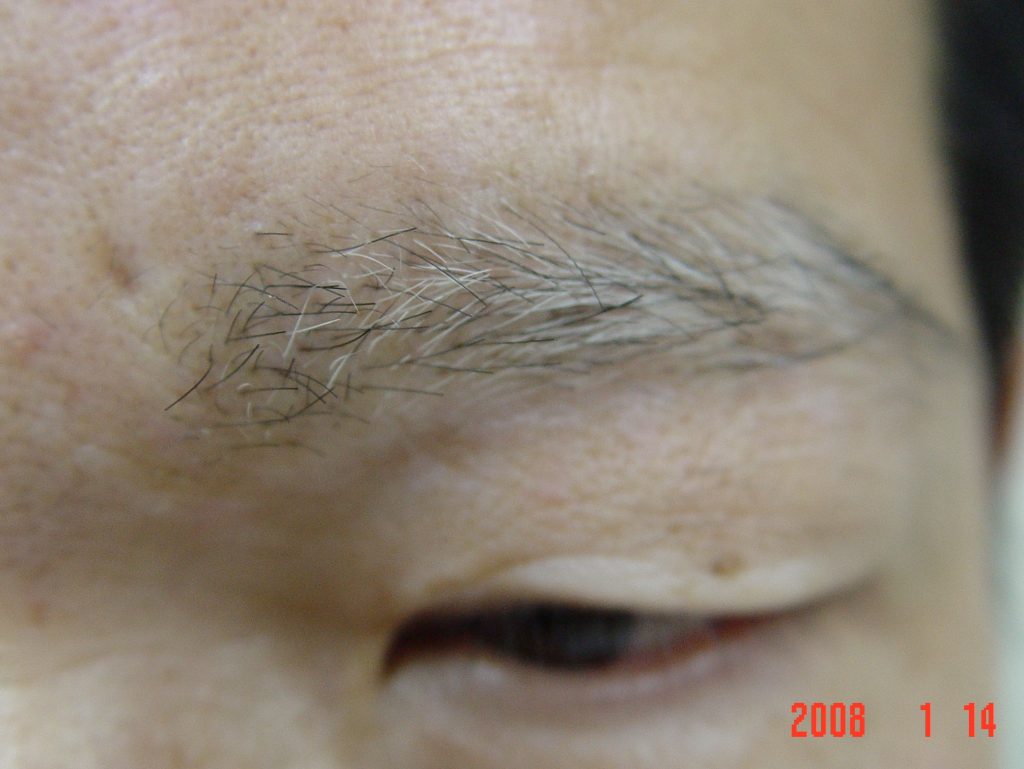
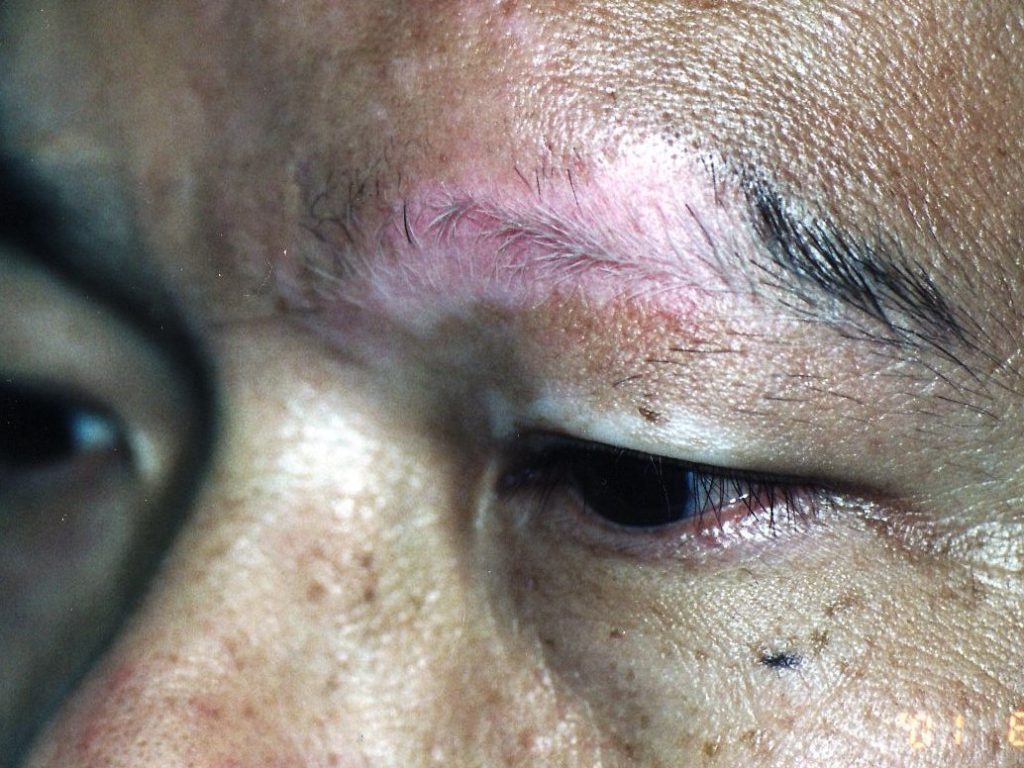
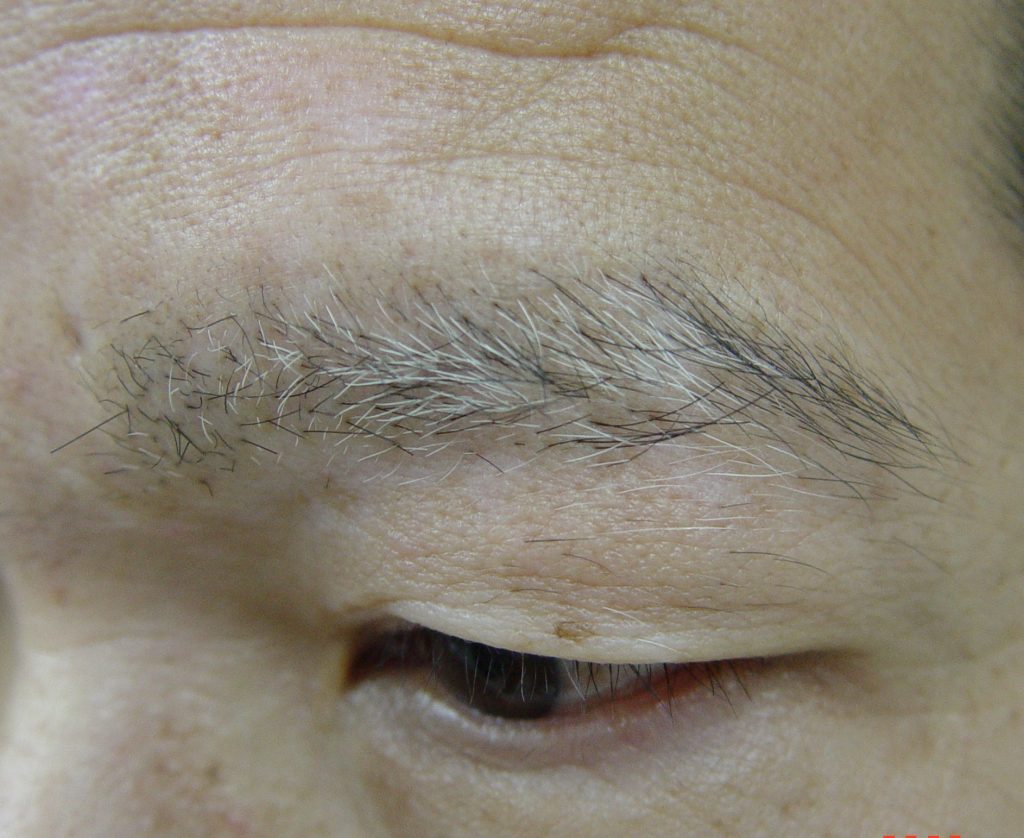
Our published case study (Hair Transplant Forum International, 2010) demonstrates sustained efficacy.
Repigmentation: A patient with stable eyebrow vitiligo achieved near-complete remission of a 3 cm² patch after transplantation of 122 single-hair grafts.
Longevity of Result: This remission was maintained at 7-year follow-up, indicating durable repigmentation.
Graft Behavior: Interestingly, many transplanted hairs lost their pigment over time, confirming that the repigmentation was driven by the ORS melanocyte stem cells, not the bulb melanocytes responsible for hair color.
This method offers unique practical benefits.
Simplified Logistics: Uses standard hair transplant equipment and skills; no need for cell culture labs.
Ample Donor Supply: The scalp provides thousands of potential graft units.
Minimal Scarring: FUE harvest avoids a linear scar; recipient sites heal imperceptibly.
Precision & Safety: Allows for targeted treatment of small, anatomically complex areas with minimal risk.
Stem Cell Therapy: Hair follicle transplantation for vitiligo works by transferring melanocyte stem cells from the follicular outer root sheath to the depigmented epidermis.
Requires Stable Disease: The procedure is only indicated for vitiligo that has been medically stable for years.
A Long-Term Solution: Clinical results, including our published case, show repigmentation can last for many years.
A Procedural Advantage: It leverages existing FUE surgical technology for a new therapeutic purpose, offering a precise and accessible surgical option.
If you have stable, localized vitiligo and are seeking a surgical repigmentation option, this advanced technique may be suitable. Send clear photographs of the affected area for a preliminary medical review. Our team can assess your candidacy and discuss the potential role of hair follicle transplantation in your treatment plan.
Images & Information shown are for reference only
Information on this website is provided for general educational purposes only and does not constitute personalized medical advice. It is not intended to promote our service or imply superiority over another.
Individual results in hair restoration vary significantly and no outcome can be guaranteed. The before-and-after images shown represent possible results — not promises. We recommend seeking independent medical advice to discuss your options … Read More
Paragraph
Pre-Consultation Review
If you want to get a personalized answer from our medical team, you can reach us using this form here. We will cantact you as soon as possible.
Our practice adheres to guidelines established by leading international organizations in Hair Restoration.
International Society of Hair Restoration Surgery is the leading global medical association that establishes international practice standards and patient safety protocols.
The American Board of Hair restoration Surgery represents the highest standard. To maintain rigorous certification requirements the physician must demonstrate surgical expertise.
Worls FUE InstituteI serves as the premier educational body focused exclusively on Follicular Unit Extraction methodology. The institute ensures consistent application of safe FUE.