
Our Innovation – Laser Hairline Placement

Laser-Guided Hairline Design: Achieving Perfect Symmetry & Personalized Aesthetics

20 Years of Expertise : Every Step Performed in Hong Kong By Doctors

Can technology ensure a perfectly symmetrical hairline?

Yes. Traditional freehand drawing is prone to human error and asymmetry. Our laser placement device projects a perfectly level, symmetrical beam of light onto the forehead, serving as an instant guide. This allows the surgeon and patient to visualize, adjust, and finalize a symmetrical hairline design in under a minute before any markings are made, ensuring precision from plan to procedure.

Sara’s Comment

Our clinic pioneered a handheld laser placement device to revolutionize the precision of hairline design in hair transplantation. This tool projects a symmetrical beam onto the scalp, allowing for rapid, accurate, and collaborative design that matches the individual’s facial contours. It solves the historical challenges of asymmetry and time-consuming manual marking, ensuring the artistic plan is perfectly executed in surgery.
Content-index

Our Rapid Hairline Placement Laser Device

Dr. Shiao’s Tripod Mounted Laser Level 2007

In 2007 Dr. Shiao reported the use of a professional grade laser level mounted on a tripod (8). The projected horizontal plane of light can ‘turned corners’ and follow the contour of the forehead. A perfectly symmetrical hairline is created instaneously. However a large room is needed to place the device at a certain distance from the patient.

Our Hand Held Laser Device 2008

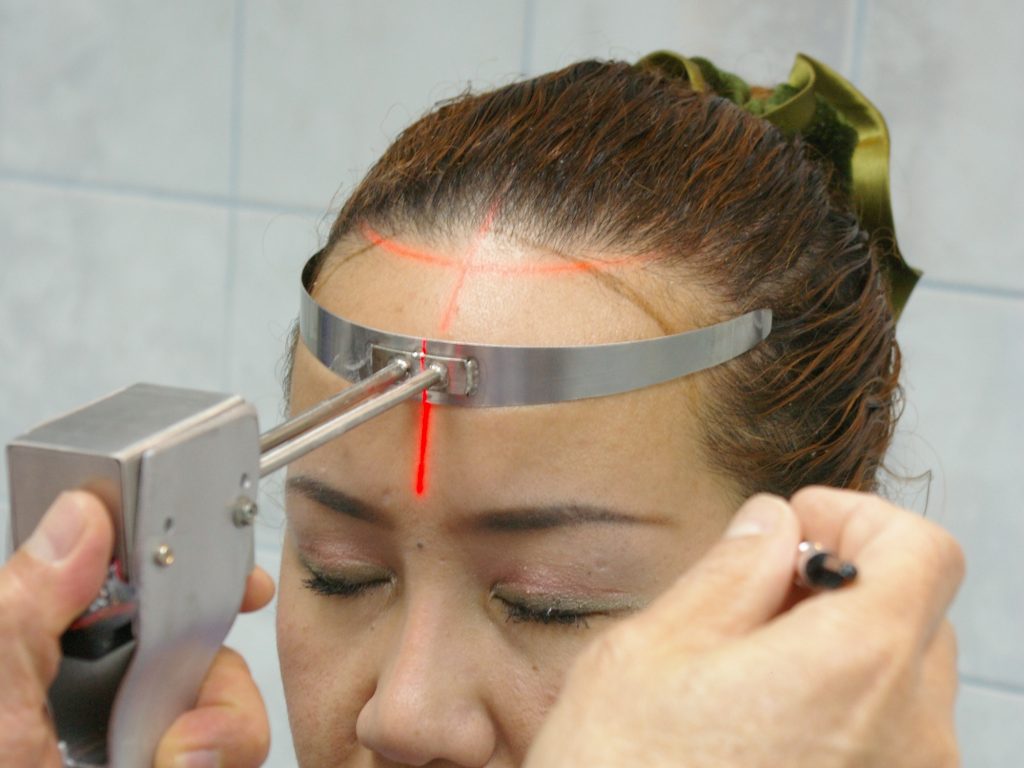
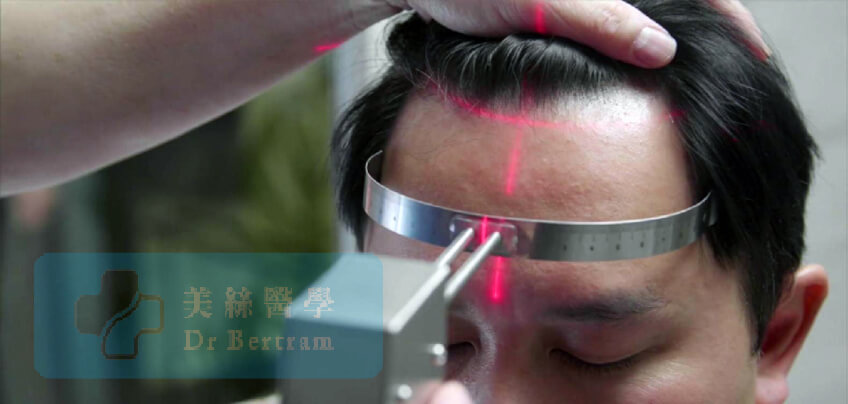
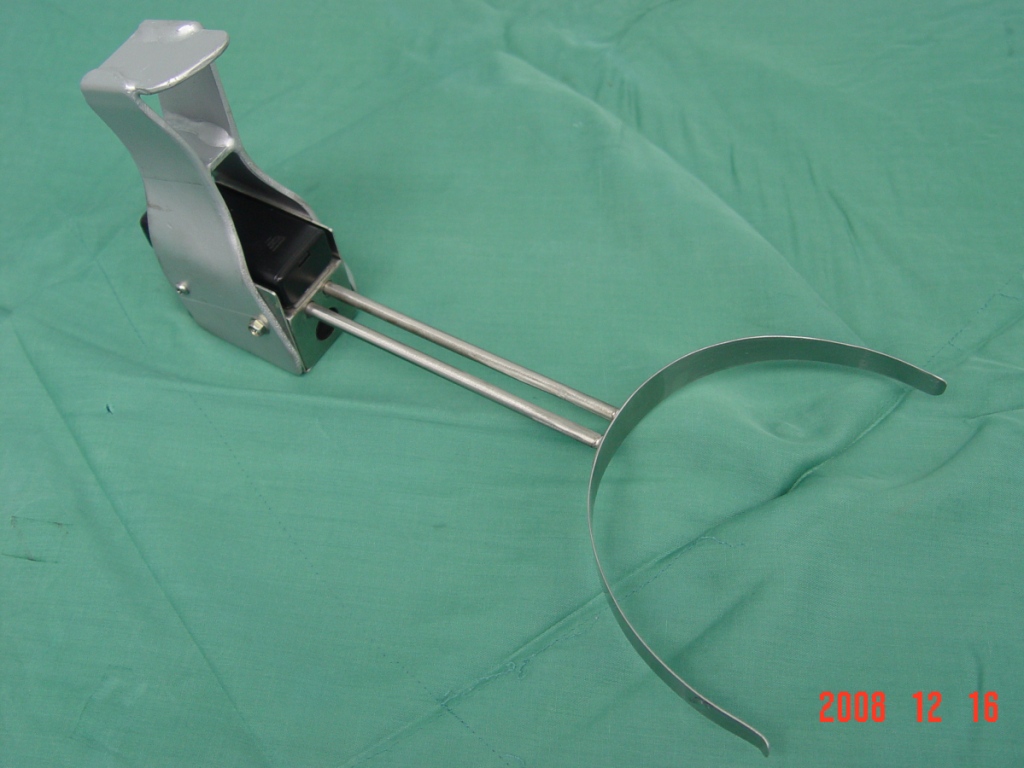
We designed the devise which has been in production since early 2008 (Fig. 1). By changing the angle of beam projection and its position along the midline, different shape of hairlines can be created. Laser level provides a perfect solution and two models have been reported in use.

The use of this device was published in Hair Restoration for Asians, Pathomvanich & Imagawa Springer, 2009

Fig 1. Latest model of a hand held laser device
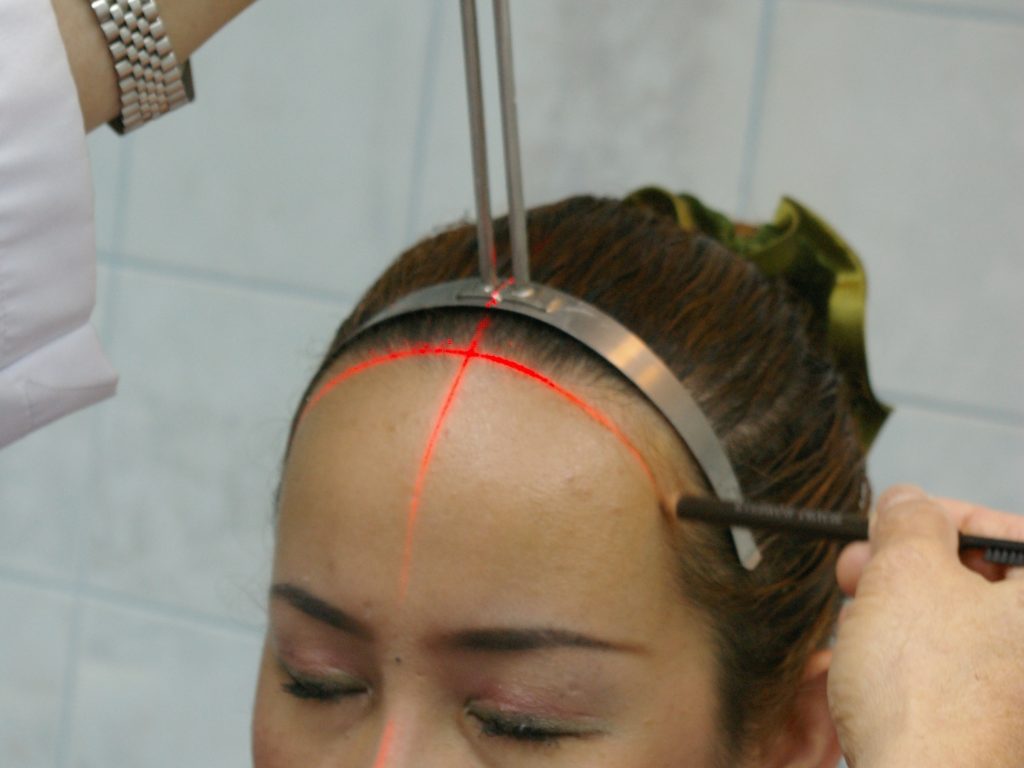
Fig 2a. Drawing a female hairline - Step 1
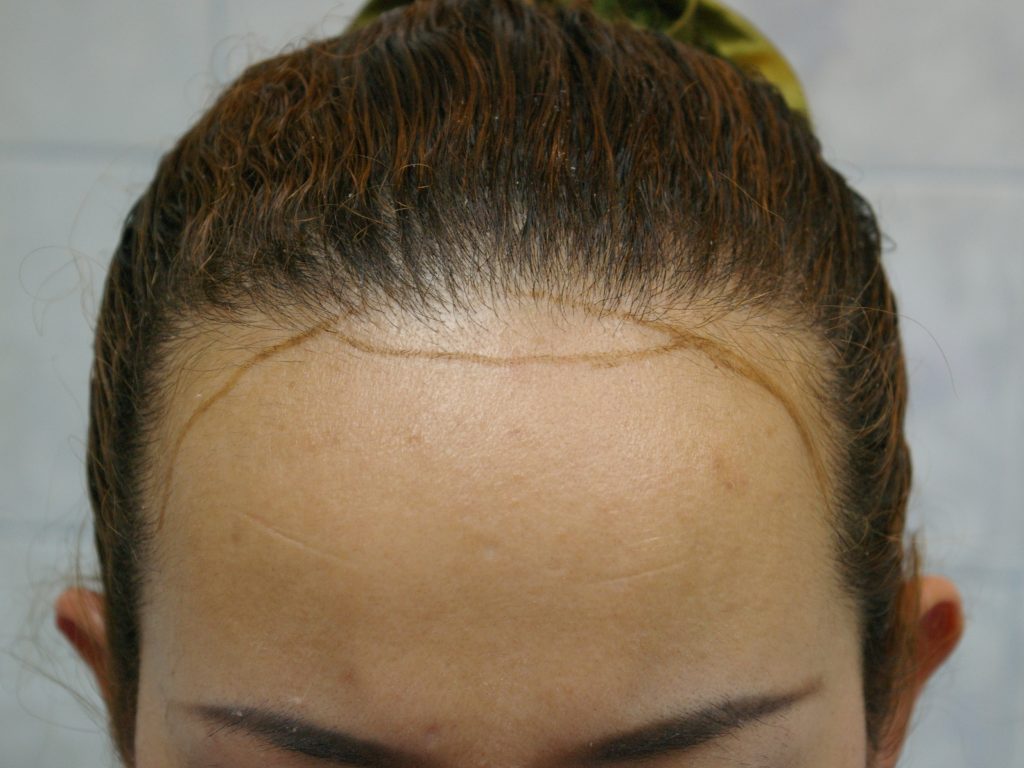
Fig 2b. Drawing a female hairline - Step 2
Fig 2c. 2 curves can be seen.
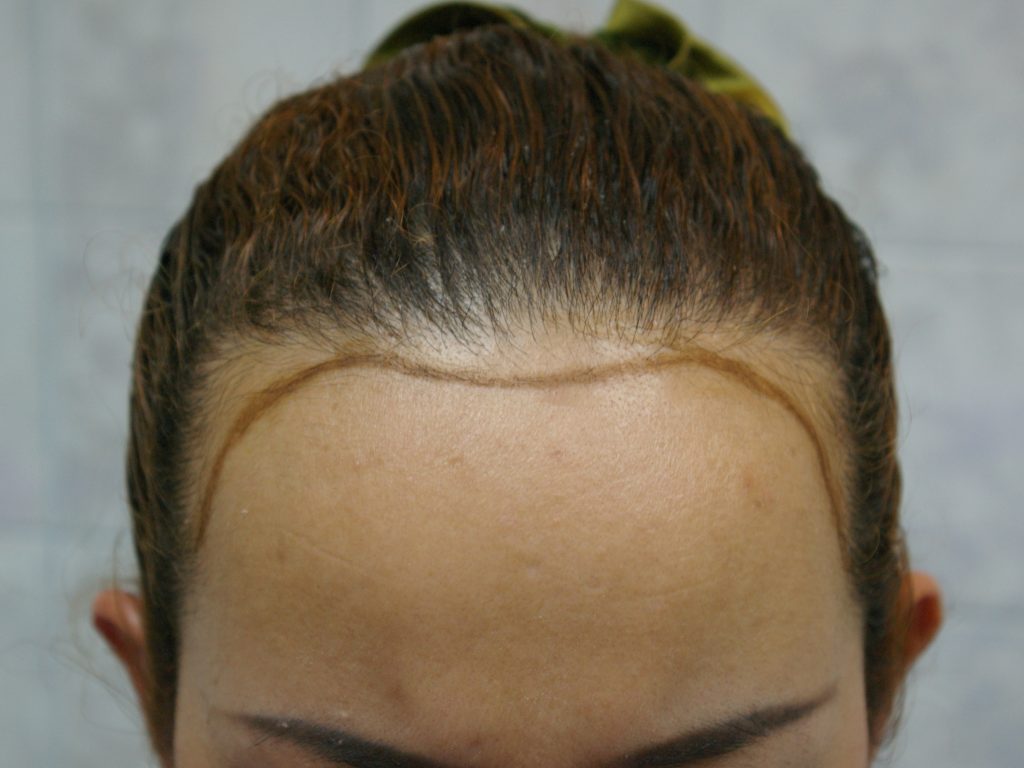
Fig 2d. Lines are smoothened to look symmetrical
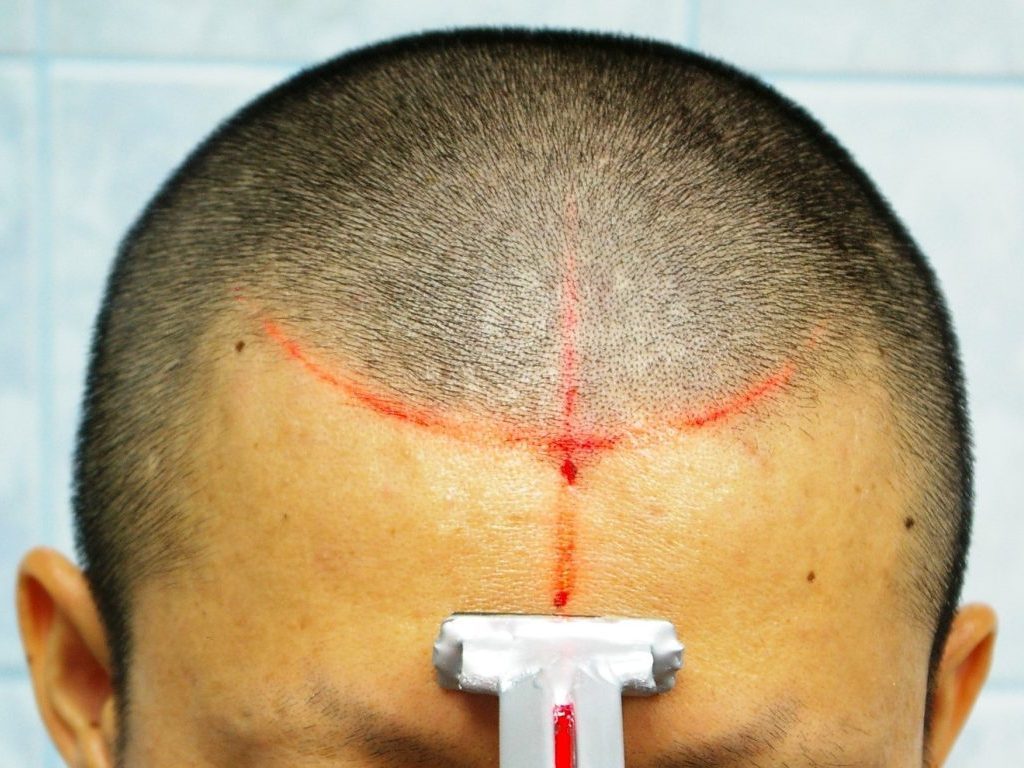
men
Fig 3. Drawing a male hairline

What problem does the laser hairline device solve?

It addresses two critical inefficiencies in traditional surgical planning:

  1. Time and Inaccuracy: Manual marking is slow, and asymmetries often require erasing and redrawing. The laser creates an instant, symmetrical baseline.

  2. Patient-Surgeon Misalignment: Patients only see the design after it’s drawn. The laser allows for real-time collaboration, as the projected line can be adjusted until the patient and surgeon agree on the ideal shape and position before any permanent ink is applied.

How does the laser hairline placement process work?

The process is a collaborative, step-by-step application of the tool.

  • Establish Midline: A vertical beam aligns with facial features (glabella, nose, philtrum) to establish the true center.

  • Project the Contour: The device is placed on the forehead. By adjusting its angle and position, a horizontal or curved beam is projected to define the proposed hairline’s shape—inverted ‘U’ for women, more horizontal for men.

  • Collaborate and Finalize: The patient views the projected line in a mirror. The surgeon adjusts the beam until the desired, symmetrical shape is agreed upon, which is then traced for surgery.

What are the specific advantages of this laser technology?

The benefits impact surgical efficiency, accuracy, and outcomes.

  • Perfect Symmetry: The laser enforces mathematical symmetry, a cornerstone of facial attractiveness often difficult to achieve freehand.

  • Rapid Design: Cuts design time from 15-20 minutes to under one minute.

  • Personalized Aesthetics: The beam can be shaped to create unique, patient-specific contours that follow natural forehead anatomy.

  • Global Validation: The device, designed in 2009, is now used by surgeons worldwide and the methodology is published in the medical textbook Hair Restoration for Asians.

Are there any limitations to laser-guided design?

The laser is a superior tool, but not a substitute for surgical judgment.

  • Surgeon’s Artistry is Key: The laser provides the symmetrical framework, but the surgeon must still apply artistic judgment to add natural irregularities, refine temporal points, and ensure the design suits the patient’s age and ethnicity.

  • Asymmetrical Anatomy: If a patient’s forehead or bone structure is inherently asymmetrical, the surgeon must artfully adapt the design for the most natural appearing result, which may involve intentional, subtle adjustments from perfect laser symmetry.

Key Takeaways

  • Precision Over Freehand: Laser-guided placement eliminates human error in achieving hairline symmetry, a critical factor in natural aesthetics.

  • Efficiency in Planning: The tool reduces design time dramatically and allows for real-time patient input before the final plan is set.

  • A Collaborative Tool: It facilitates a transparent design process where patient and surgeon jointly visualize and approve the hairline.

  • Foundation for Execution: The laser creates the perfect blueprint, ensuring the surgical implantation follows a precise, pre-approved plan for a predictable outcome.

Ready to See Your Potential Hairline Designed with Precision?

Experience the difference that collaborative, technology-assisted planning can make. During your consultation, you can see firsthand how laser guidance is used to draft a hairline tailored to your face. Request a consultation to begin the design process.

References

  1. Rose P. Hairline Design. Hair Forum – Sept/Oct 2002; 12 (5)
  2. Springer et. al. Facial Attractiveness. Visual Impact of Symmetry Increases Significantly Towards the Midline. Annual of Plastic Surgery. Aug 2007. Vol 592 (2), page 156-161
  3. Rose P., Parsley W. Science of Hairline design. In Haber & Stough Hair Transplantation 2006. Elsevier Saunders, page 55-71
  4. Simmons C. Five Old Lines and Three New Lines That Can Help When Designing a Male Temporal Hairline or When Transplanting the Frontotemporal Apex. Hair Forum – Nov/Dec 2004; 14(6)
  5. Norwood OT, Taylor BJ. Hairline Design and Placement. J Dermatology Surg Oncol. 1991 Jun; 17(6):510-8.
  6. Mayer M., Perez-Meza D. Temporal Points: Classification and Surgical Techniques for Aesthetic Results. ESHRS Journal 2003; 3(2):6-7
  7. Basto, Graças, Recife. Irregular and Sinuous Anterior Hairline: Prior Technique Refinement and Male and Female Trace Parameters. Hair Forum – January/February 2005; 15(1)
  8. Tseng-Kuo Shiao, I-Sen Shiao. Laser-Guided Hairline Design and Donor Strip Marking. Hair Forum. 2007 March/April; 17(2):53-54
  9. Ng B, D.Pathomvanich. Laser-assisted hairline placement. Hair Transplant Forum International. 2008 Sept/Oct’ 18(5), 169-173
  10. Brandy DA. A method for evaluating and treating the temporal peak region in patients with male pattern baldness. Dermatol Surg. 2002 May; 28(5):394-400.
  11. Statement On the use of laser Pointers Source of information: University of Toronto, Environmental Health and safety http://www.ehs.utoronto.ca/services/laserpg/laserptr.htm
36

MEDICAL - DISCLAIMERS

Images & Information shown are for reference only

Information on this website is provided for general educational purposes only and does not constitute personalized medical advice. It is not intended to promote our service or imply superiority over another.

Individual results in hair restoration vary significantly and no outcome can be guaranteed. The before-and-after images shown represent possible results — not promises. We recommend seeking independent medical advice to discuss your options … Read More

Paragraph

Pre-Consultation Review

Ensure You're a Good Candidate for hair transplant

Why pay for a consultation if you’re not a candidate? Start with our free WhatsApp assessment — the first step in our ‘No-Regret’ protocol to see if hair transplant is a realistic solution for your hair loss.

Still Have Questions ?

If you want to get a personalized answer from our medical team, you can reach us using this form here. We will cantact you as soon as possible.

Our Quality & Safety Standards

Our practice adheres to guidelines established by leading international organizations in Hair Restoration.

ISHRS

International Society of Hair Restoration Surgery is the leading global medical association that establishes international practice standards and patient safety protocols.

ABHRS

The American Board of Hair restoration Surgery represents the highest standard. To maintain rigorous certification requirements the physician must demonstrate surgical expertise.

WFI

Worls FUE InstituteI serves as the premier educational body focused exclusively on Follicular Unit Extraction methodology. The institute ensures consistent application of safe FUE.

This site is registered on wpml.org as a development site. Switch to a production site key to remove this banner.