
Natural Looking Hairline Design

Principles for an Undetectable, Age-Appropriate Hairline Restored

20 Years of Expertise : Every Step Performed in Hong Kong By Doctors

What makes a hair transplant hairline look unnatural?

Unnatural hairlines result from formulaic design—being too low, too straight, or too symmetrical. They ignore individual facial anatomy, hair growth patterns, and the natural, irregular softness of a native hairline. The “pluggy” look is often a failure of artistic design, not just surgical technique.

Sara’s Comment:

A successful hair transplant hairline is not a drawn line, but a personalized facial frame. It must be tailored to your unique facial proportions, bone structure, age, and ethnic characteristics. Using principles like the Phi Rule and Rule of Thirds as a guide—not a template—the goal is to design a hairline so natural it becomes an unnoticeable part of your overall appearance, restoring balance and confidence.

Content-index

What are the core artistic principles of hairline design?

Surgeons use established aesthetic principles as a flexible starting point for customization.

1. The Phi Rule (Golden Ratio 1.618):

A mathematical ratio found in nature that defines harmonious facial proportions (e.g., ideal eye distance, facial width). It guides overall facial balance.

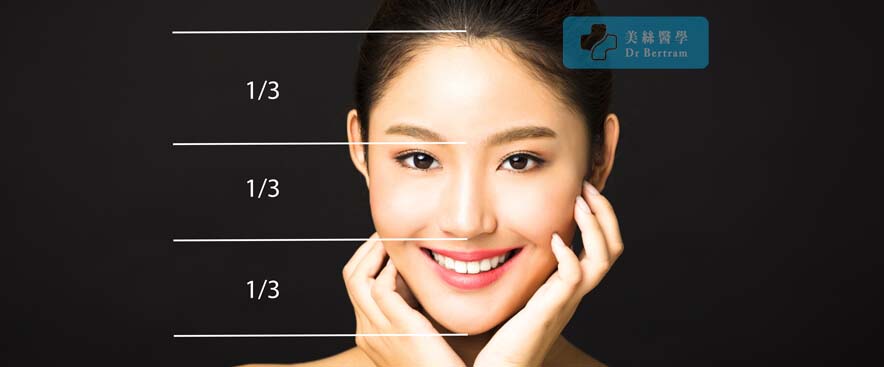
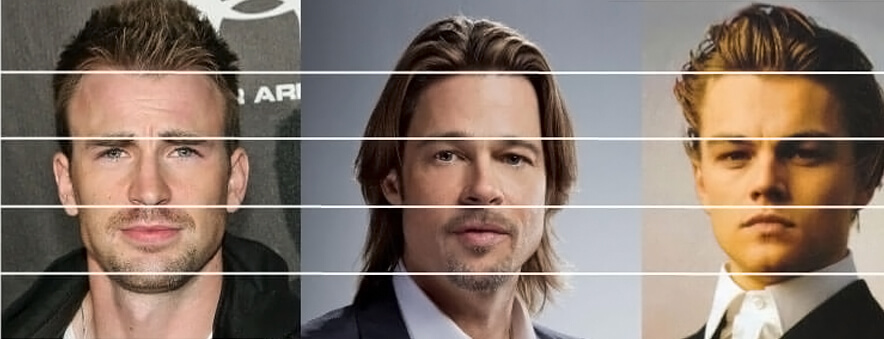
2. Da Vinci’s Rule of Thirds:

Divides the face vertically into equal thirds (hairline to brow, brow to nose base, nose base to chin). This is a common Western guideline for initial hairline height placement.

3. Ethnic & Individual Adaptation:

These rules are not absolute. For example, Asian facial proportions often differ, requiring adjustment of the hairline position to complement features like a shorter chin.

What are the four key objectives of hairline restoration surgery?

The procedure aims to achieve multiple integrated goals:

  1. Re-Frame the Face: Restore the upper frame to direct focus to your eyes, not your forehead.

  2. Re-Establish Aesthetic Balance: Use the Phi ratio to harmonize the hairline with other facial features (nose, eyes, lips).

  3. Create an Age-Appropriate Look: Design a mature hairline that complements your age, avoiding an artificially youthful look that depletes donor grafts.

  4. Increase Facial Attractiveness: Restore the foundational elements of an attractive face: symmetry, balance, and proportion.

How does hairline design differ for men and women?

The approach is fundamentally different due to distinct patterns and aesthetic goals.

Men's Hairlines:

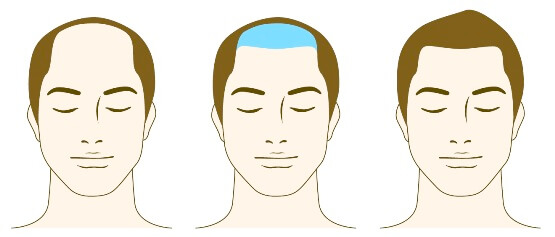
Are typically characterized by temporal recession and an M-shape. The goal is to restore a masculine, framed look that follows four basic rules (apex above outer eye, inverted-U from front, horizontal from side).

Women's Hairlines:

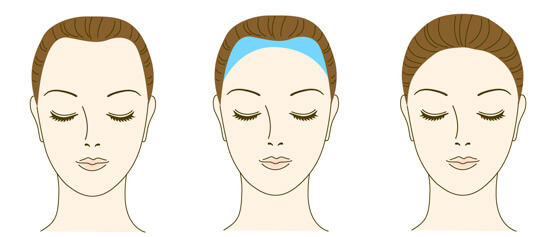
Are generally rounded and lower, with no temporal recession. The challenge is often restoring density while maintaining a soft, continuous frontal fringe. Imposing a masculine pattern on a woman is a common and glaring error.

What are the common surgical plans for different male hairline patterns?

Strategy is based on your specific pattern of loss.

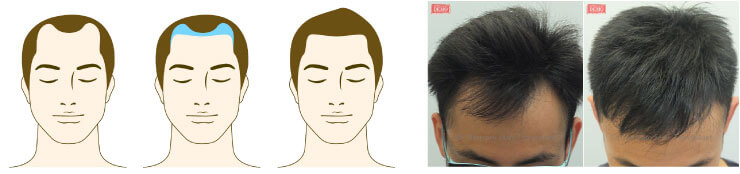
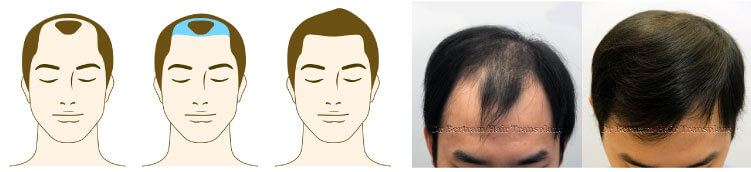
1. M-Shaped (Receding Apex):

Focus on reconstructing frontotemporal zones. Requires ~3,000–3,600 hairs. Ideal for Class III patterns.

2. Receding Hairline with Retained Forelock: 

Fill bilateral recessions to blend with a strong central forelock. Requires ~2,400–3,200 hairs.

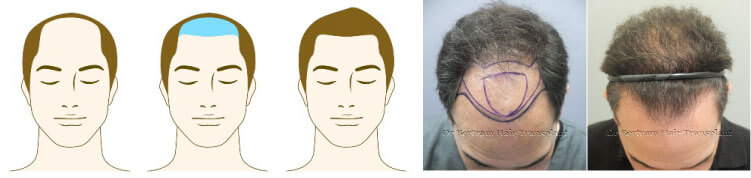
3. Inverted U (Frontal & Mid-Scalp Loss):

Restore a dense frontal band. Requires ~3,600+ hairs. Crown work is typically deferred.

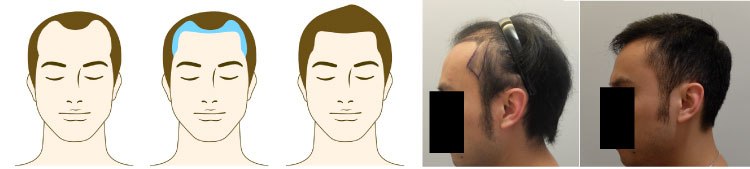
4. Loss with Temporal Recession: 

Advanced cases requiring temporal point restoration. Needs careful angulation and ~3,600+ hairs. Donor conservation is critical.

What tools and innovations improve precision in design?

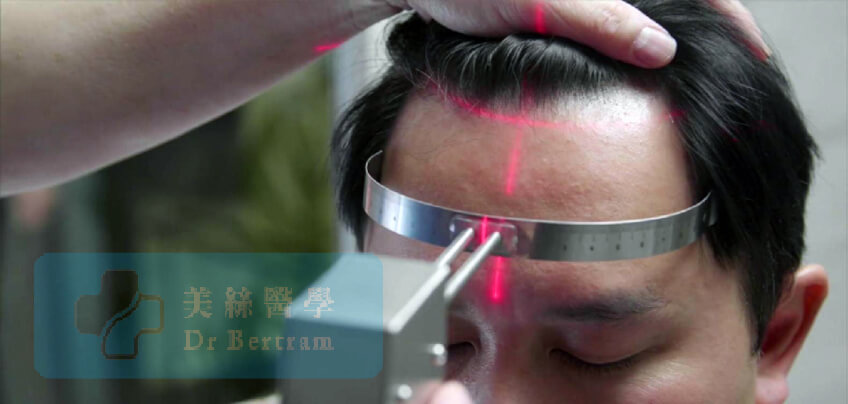
Accuracy is paramount. Our clinic pioneered the Hand-held Laser Hairline Placement Device to project the proposed hairline onto the scalp before marking. This allows for real-time, collaborative adjustments with the patient, ensuring the design meets aesthetic goals before any incisions are made.

Key Takeaways

  • Design is Personal: A natural hairline must be custom-designed for your face, using mathematical principles as a guide, not a rigid template.

  • Objectives Are Multifaceted: Success is measured by re-framing the face, restoring balance, achieving an age-appropriate look, and enhancing overall attractiveness.

  • Gender Designs Diverge: Men’s and women’s hairlines follow different anatomical patterns; applying one standard to both genders creates unnatural results.

  • Pattern Dictates Plan: The surgical strategy and graft count are determined by your specific pattern of hairline recession.

  • Precision Tools Matter: Technology like laser placement devices increases accuracy and patient involvement in the critical design phase.

Ready to Design Your Personalized Hairline?

The design process is the most critical step in your restoration. Send clear, forward-facing photos for a preliminary hairline design analysis. Our surgical team will assess your facial proportions and hair loss pattern to discuss a tailored plan that frames your face naturally and sustainably.

36

MEDICAL - DISCLAIMERS

Images & Information shown are for reference only

Information on this website is provided for general educational purposes only and does not constitute personalized medical advice. It is not intended to promote our service or imply superiority over another.

Individual results in hair restoration vary significantly and no outcome can be guaranteed. The before-and-after images shown represent possible results — not promises. We recommend seeking independent medical advice to discuss your options … Read More

Pre-Consultation Review

Ensure You're a Good Candidate for hair transplant

Why pay for a consultation if you’re not a candidate? Start with our free WhatsApp assessment — the first step in our ‘No-Regret’ protocol to see if hair transplant is a realistic solution for your hair loss.

Still Have Questions ?

If you want to get a personalized answer from our medical team, you can reach us using this form here. We will cantact you as soon as possible.

Our Quality & Safety Standards

Our practice adheres to guidelines established by leading international organizations in Hair Restoration.

ISHRS

International Society of Hair Restoration Surgery is the leading global medical association that establishes international practice standards and patient safety protocols.

ABHRS

The American Board of Hair restoration Surgery represents the highest standard. To maintain rigorous certification requirements the physician must demonstrate surgical expertise.

WFI

Worls FUE InstituteI serves as the premier educational body focused exclusively on Follicular Unit Extraction methodology. The institute ensures consistent application of safe FUE.

This site is registered on wpml.org as a development site. Switch to a production site key to remove this banner.