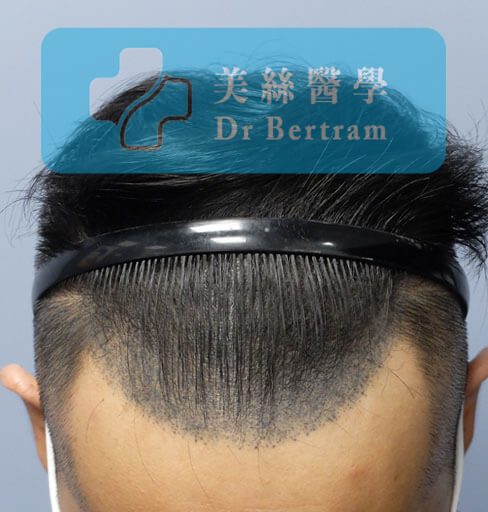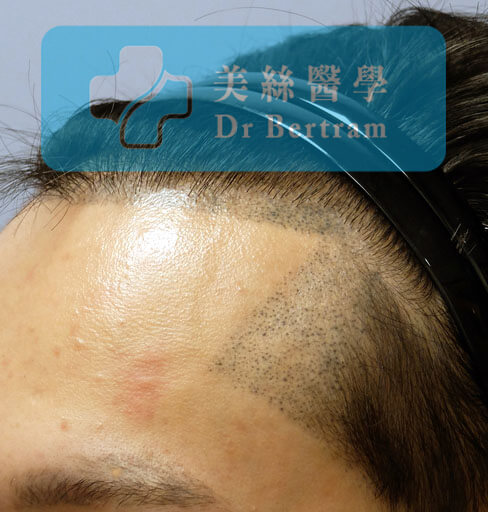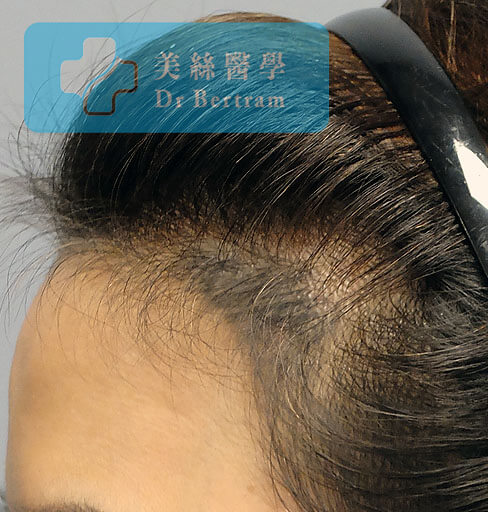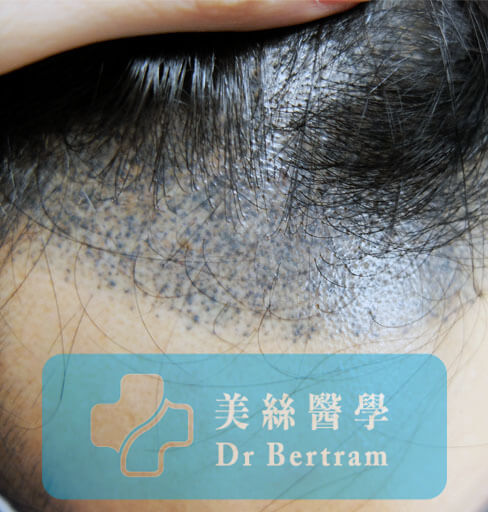

Failed SMP Repair – Surgical Plan

Dr Bertram – Restoring Natural Hairlines After Cosmetic Complication

What Is Considered a Failed SMP ?

Last Updated: 6 Nov 2025

A failed scalp micropigmentation (SMP) case refers to any outcome that falls short of delivering a natural, consistent, and satisfying cosmetic result. These failures may arise from poor technique, inappropriate planning, or improper pigment use.

Case 1 : Woman Hairline
Case 2 : Man Hairline
Case 3 : Man Temporal Point
Case 4 : Man Hairline
Case 5 : Woman Hairline
Case 6 : Man Hairline

Content-index

Common Types of Failed SMP

1. Poor Design / Hairline Shape

  • Unnatural hairline (too straight, low, or overly sharp)
  • Symmetry errors not matching facial structure
  • Masculine hairline in females or vice versa

2. Wrong Pigment Color

  • Pigment appears too dark, bluish, greenish, or fades into a gray haze
  • Poor pigment matching with skin tone and hair color
  • Use of tattoo ink instead of SMP-specific pigments, leading to long-term discoloration

3. Uneven or Blotchy Application

  • Inconsistent dot density or spacing
  • Blurring or spreading of pigment due to wrong depth or poor skin condition
  • Patchy results with visible gaps or overlapping dots

4. Excessive Depth or Scarring

  • Pigment injected too deep → results in blowouts (blurred or ink-spread spots)
  • May also lead to scarring, especially in thin or scarred skin

5. Color Fading or Rapid Disappearance

Premature fading due to :

  • Low-quality pigments
  • Sun exposure
  • Poor aftercare
  • Autoimmune or oily skin rejecting pigment

6. Infection or Allergic Reactions

  • Occurs in non-sterile environments or with unapproved inks
  • May cause inflammation, pustules, or allergic dermatitis

7. Wrong Candidate Selection

  • Patients with active skin conditions (e.g., psoriasis, eczema)
  • Overly oily skin where pigment won’t hold well
  • Unrealistic expectations from clients

Why More & More Failed SMP Cases ?

No Regulation, No Rule :

Scalp Micropigmentation (SMP) has surged in popularity as a non-surgical option for camouflaging hair loss. However, in many countries — including Hong Kong and China — there are no official regulations governing who can perform SMP.

As a result, the industry is flooded with poorly trained technicians, many of whom operate out of hair salons or beauty centers without any formal medical or dermatological background.

Most of these providers treat SMP like traditional body tattooing. They use the same tools, pigments, and methods designed for skin art — not for the sensitive and curved surface of the scalp. Without medical knowledge of hair anatomy, pigmentation depth, and scalp health, mistakes are not just common — they are expected.

Unnatural Results from Poor Technique :

SMP is a visual illusion, and when done right, it should mimic the subtle shadows of hair follicles. However, many failed SMP cases share common traits:

  • Flat, two-dimensional look : The scalp has contours and hair grows at different angles. Without shading and density gradients, the result looks stamped or painted.
  • Solid hairline with no irregularity : Natural hairlines are soft and broken. A straight, uniform SMP hairline immediately looks fake—especially in bright light or under scrutiny.
  • Dark, bluish or greenish hue over time : Inexperienced practitioners often deposit pigment too deeply, causing it to spread under the skin or oxidize into unnatural tones.
  • Overly dense or misplaced dots : SMP dots that are too close together or placed randomly disrupt the natural flow of hair growth patterns.

SMP Has Limitations — Especially Without Hair :

The biggest mistake is using SMP alone to recreate a bald top or frontal hairline where no real hair exists. In such cases, the illusion breaks down quickly because SMP offers no texture, no depth, and no reflection like real hair does. In overhead lighting or sunlight, the difference is obvious, making the result look more like a painted scalp than real density.

Even worse, when patients later decide to pursue a hair transplant, previous SMP in the wrong zone (especially on the hairline) makes the correction process more complicated and visible.

No Standardized Training or Guidelines :

Unlike medical hair transplant surgery — where international organizations like the ISHRS or ABHRS offer structured training and certification — there is no governing body ensuring quality standards in SMP. Each practitioner invents their own method, and client safety, hygiene, pigment quality, and design artistry vary wildly.

This lack of regulation leads to :

  • No quality control
  • No consistent pigment standards
  • No accountability for bad outcomes

Demand Grows, But So Do Mistakes :

As more people seek SMP as a quick fix or affordable option, demand has skyrocketed—but so has the number of botched jobs. The surge in poorly executed SMP cases reflects the gap between consumer expectations and technical ability.

For patients considering SMP, it’s critical to :

  • Choose clinics with medical supervision and artistic experience
  • Avoid centers that only offer tattoos or cosmetics
  • Understand that SMP is not a replacement for hair—it’s an illusion, and the right context matters

When Is Correction Needed ?

1. Correction is usually needed when :

  • Hairline looks unnatural or overly tattooed
  • Dots appear smeared, blue, or too large
  • The SMP is easily detectable or looks artificial

2. Corrective options include :

  • Laser tattoo removal
  • Camouflage with new SMP using proper technique
  • Hair transplant + SMP combo for better realism

Our Result

Before
After repair by FUE hair transplant

Cases Suitable for Repair by Hair Transplant

These cases can often be successfully corrected with hair transplantation :

1. Overly Low or Sharp SMP Hairline :

  • Common in men who received an aggressive or unnatural hairline design
  • Repair Strategy : Transplanting natural single-hair grafts in front of the SMP line to create a realistic feathered transition.

2. Patchy or Faded SMP on a Bald Scalp :

  • Fades unevenly or leaves an unnatural dotted pattern
  • Repair Strategy : Hair transplant in the balding zone to restore density and draw attention away from the flawed pigmentation.

3. Good Donor Supply + Natural SMP Base :

  • Patients with adequate donor hair who want a more 3D look over SMP base
  • Repair Strategy : Hair transplant can enhance the illusion of thickness when combined with fading SMP

Cases Conditionally Suitable for Repair

These require caution and proper evaluation before proceeding :

1. Dense, Dark SMP That Cannot Be Faded :

  • Difficult to camouflage with hair alone
  • Repair Strategy : May require laser removal first before transplanting to avoid contrast or mismatched patterns

2. Discolored SMP ( Blue/Green Tone ) :

  • Common with older or poor-quality inks
  • Repair Strategy : May need partial laser removal or fading, followed by transplant to repopulate sparse zones

3. Good Donor Supply + Natural SMP Base :

  • Suggests underlying skin incompatibility with trauma — hair transplant may exacerbate the condition

Cases Not Suitable for Repair

Surgery is not recommended in these scenarios :

1. Extensive SMP on Thin or Scarred Scalp with No Donor Hair :

  • Transplant not possible due to poor donor supply or non-viable recipient area

2. Active Keloid or Hypertrophic Scarring from SMP Tattooing :

  • Risk of worsening the scarring with surgery

3. Unrealistic Expectations or Psychological Distress ( Body Dysmorphic Disorder )

  • Patients dissatisfied with SMP may project similar dissatisfaction onto transplant results

4. Severe Pigment Migration or Allergic Reaction :

  • Suggests underlying skin incompatibility with trauma — hair transplant may exacerbate the condition

Failed SMP - Corrective Plans

Repaired by Hair Transplant

To remove these unnatural lines and pigments, we do not recommended using lasers. This may inflict damage to the skin and underlying hair follicles, and leave scars on the forehead as well as causing hair loss.

We would recommend considering hair transplants to repair. The effect according to our experience is more natural. As we make use of the original SMP shading effect, less number of grafts will needed to be transplanted. Whether to use FUE or FUT depends on the areas for repair and personal preference.

Objectives

  • To restore natural appearance, improve density, and correct unnatural hairline or distribution patterns caused by poorly executed previous hair transplants or scalp micropigmentation ( SMP ).
  • Particular focus is given to the frontal hairline correction and camouflaging visible grafts or scarring on the crown or top.

Patient Selection

Patients with :
  • Pluggy or uneven hairline from outdated transplant methods
  • Noticeable grafts with poor angulation or unnatural direction
  • Donor area with enough reserve for corrective grafting :
    – Failed SMP causing an unnatural look
    – Reasonable expectations regarding improvement rather than perfection
Not suitable if :
  • Donor supply is severely depleted
  • Psychological dissatisfaction  ( e.g., Body Dysmorphic Disorder ) persists regardless of improvement
  • Active scarring disorders ( e.g., keloid ) are present

Number of Grafts

Depends on area and severity of the prior failure. Usually:

  • 600–1,200 grafts ( 1,200 – 2,400 Hairs ) for hairline correction
  • 1,500–2,200 grafts ( 2,800 – 3,600 Hairs ) for top and crown repair
  • A conservative approach is often preferred due to prior overharvesting or trauma.

Number of Sessions

1–2 sessions depending on:

  • Degree of correction needed
  • Donor availability
  • Graft survival in previously damaged or scarred zones

Selected Areas

  • Frontal hairline ( plugs or low SMP line correction )
  • Top or crown ( repair of visible unnatural grafts, gaps, or density mismatches )
  • Donor area ( to minimize signs of overharvesting or scarring if needed )

Techniques Used

  • FUE preferred for precision in targeting small areas and minimizing additional scarring
  • FUT may be considered if donor depletion is a concern and additional grafts are required
  • Graft angulation, direction, and density matching are critical for a natural blend
  •  

Adjuvant Therapy

  • No long-term medication needed to sustain the transplanted grafts
  • Advised to treat any underlying hair thinning ( e.g., MPHL ) with minoxidil or finasteride
  • Special attention to :
    1. Correction of unnatural SMP along the hairline – using soft, feathered single-hair grafts in irregular pattern
    2. Unnatural appearance on top – redistribute grafts for better angulation, density, and flow
36

conditions of use

Medical Disclaimer

Information provided on this website is for educational purposes only and is not intended as medical advice. It should not be interpreted as promotional material or as claims of superiority over other techniques or providers.

Individual results may vary, and no outcome can be guaranteed. Always consult with a qualified healthcare professional before making any decisions about medical treatment.

Pre-Consultation Review

Ensure You're a Good Candidate for hair transplant

Why pay for a consultation if you’re not a candidate? Start with our free WhatsApp assessment — the first step in our ‘No-Regret’ protocol to see if hair transplant is a realistic solution for your hair loss.

Still Have Questions ?

If you want to get a personalized answer from our medical team, you can reach us using this form here. We will cantact you as soon as possible.

Our Quality & Safety Standards

Our practice adheres to guidelines established by leading international organizations in Hair Restoration.

ISHRS

International Society of Hair Restoration Surgery is the leading global medical association that establishes international practice standards and patient safety protocols.

ABHRS

The American Board of Hair restoration Surgery represents the highest standard. To maintain rigorous certification requirements the physician must demonstrate surgical expertise.

WFI

Worls FUE InstituteI serves as the premier educational body focused exclusively on Follicular Unit Extraction methodology. The institute ensures consistent application of safe FUE.

This site is registered on wpml.org as a development site. Switch to a production site key to remove this banner.