
Is Your Donor Area at Risk?
Home » Regret 2 – Donor Depletion After Hair Transplant
Last Updated: 8 Nov 2025
One of the most damaging consequences of unregulated, low-cost hair transplant services — especially in black market settings — is donor depletion. The donor area, typically the back and sides of the scalp, contains a limited number of permanent hair follicles.
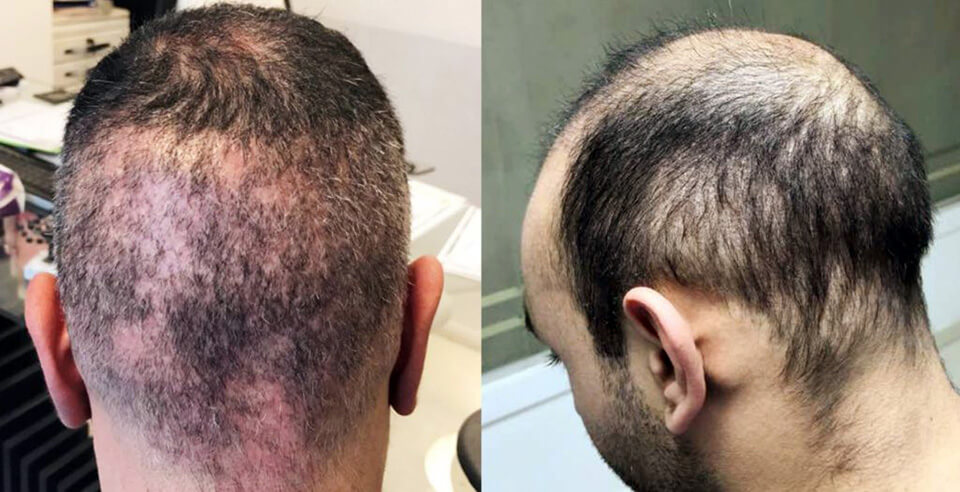
Once extracted, these follicles do not regenerate. In black market clinics, procedures are often performed by untrained personnel who focus on harvesting large numbers of grafts in a single session, regardless of long-term planning or medical safety. This leads to overharvesting, high transection rates, and visible scarring, leaving patients with patchy, thin donor zones that can no longer be used for future transplants.
Unfortunately, once the donor supply is exhausted or damaged, even a skilled surgeon may have no way to reverse the harm.
Reference
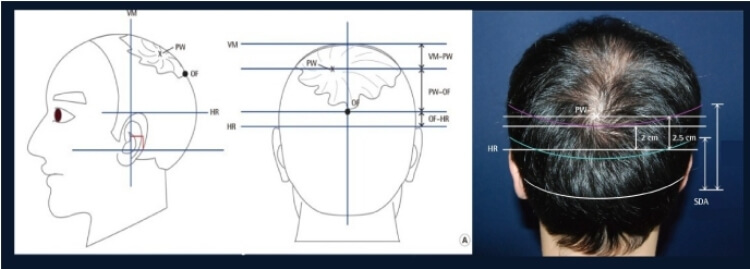
1. J.H.Pak, et al. Predicting the Permanent Safe Donor Area for Hair Transplantation in Koreans with Male Pattern Baldness according to the Position of the Parietal Whorl. Arch Plast Surg. 2014 May; 41(3): 277–284.
Donor supply is the ultimate limiting factor in hair transplantation for male pattern baldness (MPB) patients. According to Norwood’s Classification, a man with advance Class VII balding would still have a rim of hairs at the sides and back of the head.
This is labelled as the “Safe Donor Area” that is expected to be permanently covered with hair for a lifetime and therefore, provide permanent coverage when transplanted to the recipient area.
Hair transplant surgeons have been trying to transplant the maximum-possible number of hair grafts in a single session to cover more of the recipient area.
Many surgeons have frequently been in dispute about the appropriate standards for defining a safe donor area.
FUE and ARTAS are known to require a much larger donor area when compared to Strip/FUT. It has been a great concern that some hair transplant surgeon chose to ignore this Safe Donor Zone when desperate for the number of grafts. This obviously viloates the true purpose of hair transplant.
Asian scalps often present unique challenges: denser skin, lower native donor density, and straighter hair that reveals gaps more easily. Our preservation-first protocol includes :
For young patients with early or aggressive hair loss, we often recommend a modest first procedure — just enough to frame the face — while safeguarding >80% of the donor reserve for the decades ahead.
Many investors believe hair transplant is a quick way of making money. Centers are set up all over the world and doctors without proper training are assigned to take the follicles out and put them back, without caring about the result. Consequently we are seeing more and more clients with unsatisfactory results, such as scarring and hair grafts that are not growing. This has become a global problem.
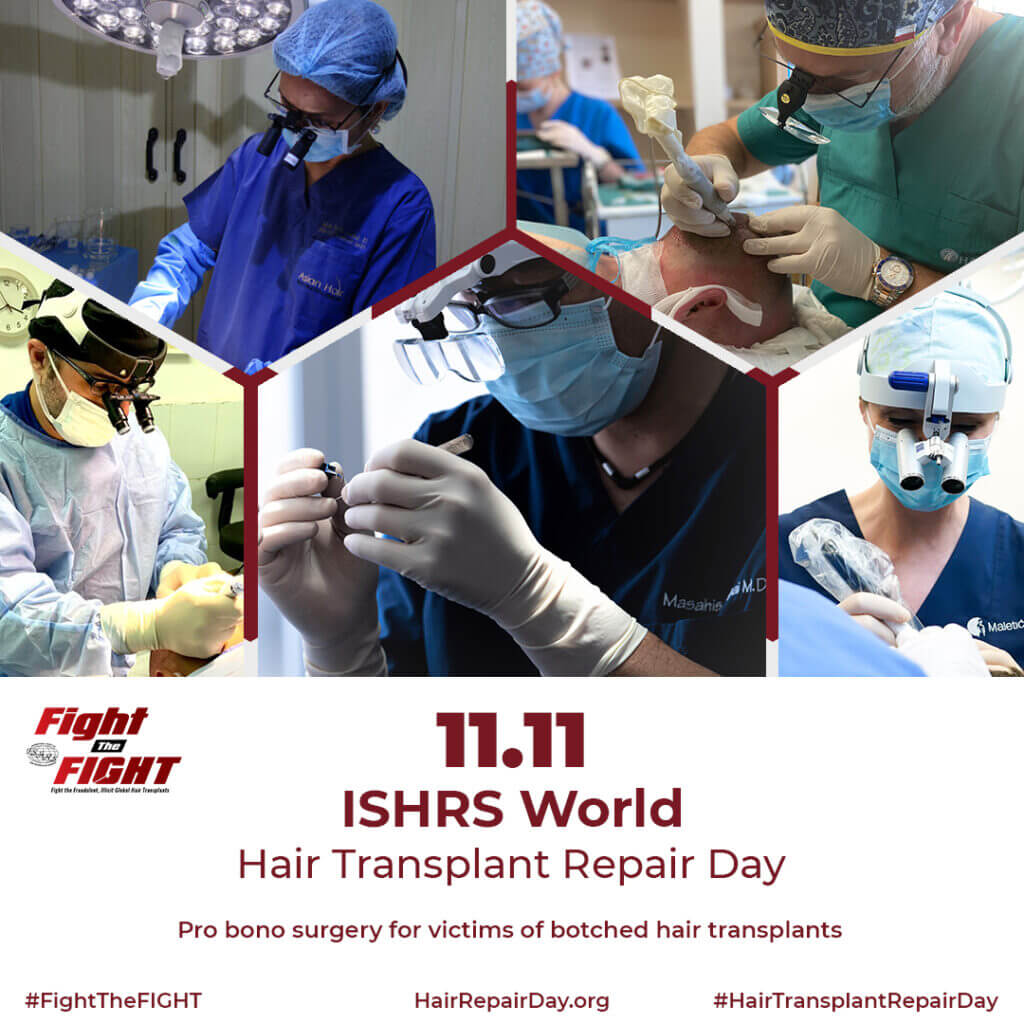
The ISHRS has designated November 11th every year as “World Hair Transplant Repair Day” as a way of helping patients who have had a botched hair transplant surgery by unqualified doctors or black market clinics. As an ISHRS Fellow Member we are part of this mission.
A successful transplant isn’t judged by day 30 — but by year 10, year 20, and beyond.
At its core, ethical hair restoration is an act of stewardship. The “No Regret” standard means never sacrificing your future for a temporary gain.
Because the best hair transplant isn’t the one with the most grafts — it’s the one that still looks right decades later, with options still open, and confidence intact.
conditions of use
Information provided on this website is for educational purposes only and is not intended as medical advice. It should not be interpreted as promotional material or as claims of superiority over other techniques or providers.
Individual results may vary, and no outcome can be guaranteed. Always consult with a qualified healthcare professional before making any decisions about medical treatment.
Pre-Consultation Review
If you want to get a personalized answer from our medical team, you can reach us using this form here. We will cantact you as soon as possible.
At Dr. Bertram Hair Transplant, we only offer what aligns with natural results, minimal risk, and realistic expectations. Since 2009, our FUE protocols are in strict accordance with evidence-based guidelines from ISHRS and WFI. Every procedure is internally audited against ABHRS surgical benchmarks.
International Society of Hair Restoration Surgery is the leading global medical association that establishes international practice standards and patient safety protocols.
The American Board of Hair restoration Surgery represents the highest standard. To maintain rigorous certification requirements the physician must demonstrate surgical expertise.
Worls FUE InstituteI serves as the premier educational body focused exclusively on Follicular Unit Extraction methodology. The institute ensures consistent application of safe FUE.