
Men Thinning Top – Surgical Plan

Hair Transplant for Crown Baldness: Surgical Planning for the Vertex & Top Scalp

20 Years of Expertise : Every Step Performed in Hong Kong By Doctors

Can a hair transplant fix a thinning crown or bald spot?

Yes, a hair transplant is a permanent solution for vertex baldness. However, crown restoration is often more complex than frontal work. It requires careful design to recreate the natural hair whorl and a significant number of grafts for adequate coverage. Candidacy hinges on having stable loss and a robust donor supply to meet the area’s density requirements without compromising future needs.

Sara’s Comment:

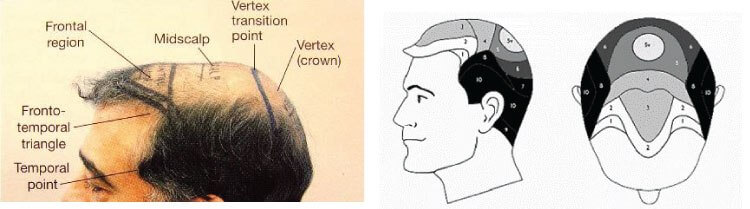
Thinning at the crown (vertex) is a common progression of male pattern baldness. A hair transplant can effectively restore coverage, but it requires careful planning due to the unique whorl pattern and higher graft demand. Success depends on stable hair loss, excellent donor supply, and often concurrent medical therapy to prevent further loss around the transplanted area, ensuring a lasting, natural result.
Content-index

What causes thinning and baldness on the top of the scalp?

Like frontal recession, crown hair loss is primarily driven by genetics and the hormone DHT, which miniaturizes follicles in this genetically sensitive zone.

  • Notable Correlation: Some studies suggest a link between significant vertex baldness and an increased risk of coronary heart disease, particularly when loss begins early.

  • An associated physical sign can be a diagonal earlobe crease (Frank’s sign). This highlights that pattern hair loss can be a clinical marker of systemic health, though correlation does not equal causation.

Who is a suitable candidate for crown restoration surgery?

Crown transplantation requires stringent candidacy due to the high graft demand and progressive nature of loss in this area.

Yes! You are likely a good candidate if you have:

  • stable, defined bald spot rather than diffuse, active thinning.

  • Excellent donor density to supply the needed grafts without over-harvesting.

  • Realistic expectations, understanding that goal is improved coverage, not 100% adolescent density.

  • Willingness to use maintenance therapy (e.g., finasteride) to protect surrounding native hair.

No! You are likely NOT a good candidate if you have:

  • Diffuse, unstable thinning across the entire top of the scalp.

  • Insufficient donor hair for meaningful coverage.

  • Unrealistic goals or reluctance to use medical therapy, risking an isolated “island” of transplanted hair.

What is the surgical strategy and how many grafts are needed?

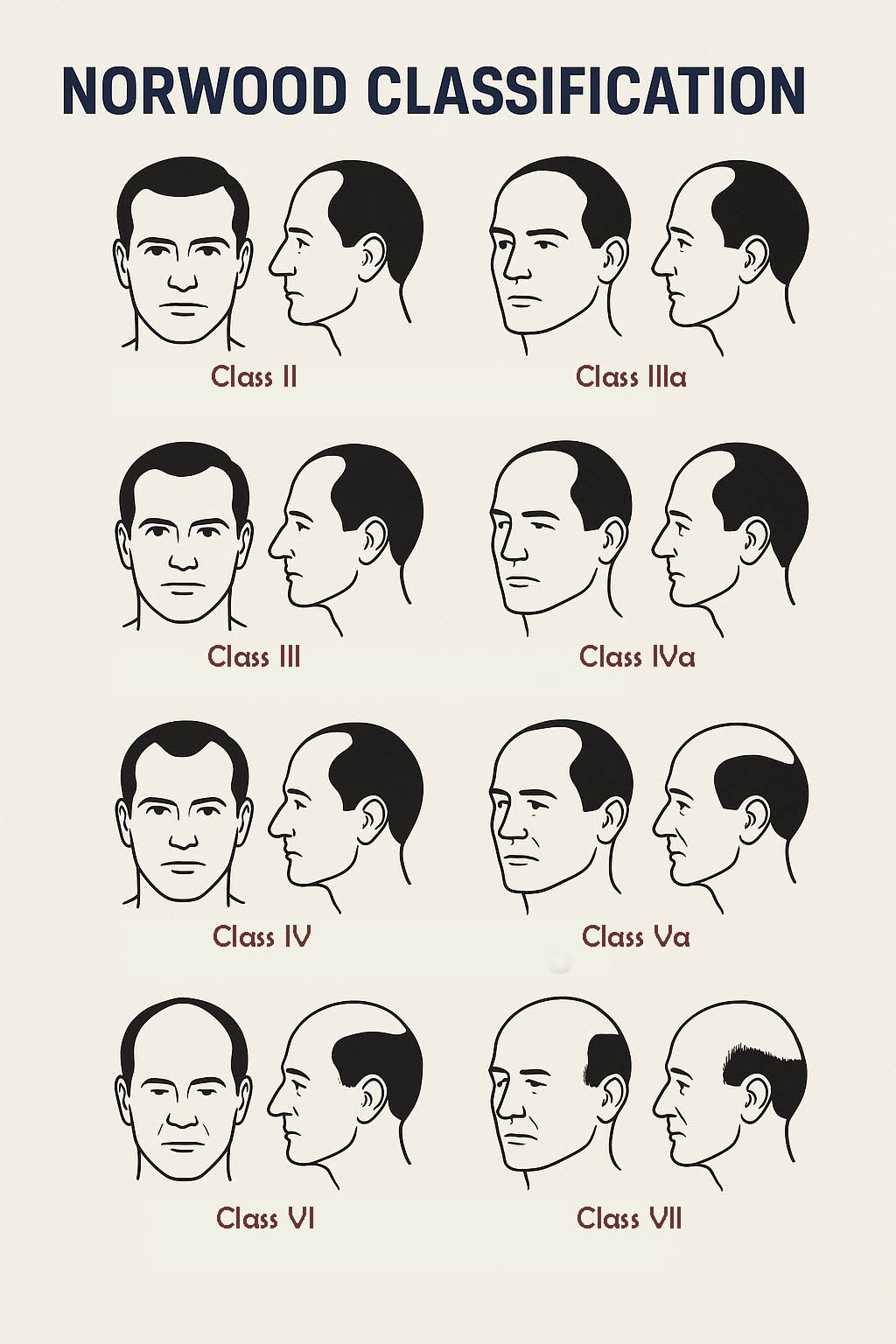
The plan is dictated by your Norwood classification and involves strategic graft placement to mimic natural growth.

Graft Estimates:

  • Norwood Class III Vertex/IV may require 1,200–1,800 graftsClass V and above often need 2,000–2,500+ grafts for cosmetic coverage..

The Whorl is Critical:

  • Recreating the natural spiral (whorl) pattern is essential for invisibility. Grafts must be placed with precise angle and direction to follow this pattern.

Density Strategy:

  • Crown density is often lower (30-40 FU/cm²) than the front, as the whorl pattern creates an illusion of fullness. Grafts are prioritized for the central, most visible zone.

How does crown restoration fit into overall long-term planning?

The crown is often prioritized after the frontal hairline in a comprehensive treatment plan.

  • Front vs. Crown Balance: If donor supply is limited, creating a strong frontal frame typically takes priority for aesthetic impact.

  • Future-Proofing: Planning must account for future loss progression. We avoid over-committing grafts to the crown if it jeopardizes the ability to maintain a natural-looking pattern as you age.

  • Medical Therapy is Essential: Finasteride is strongly recommended to stabilize native hair around the transplant, preventing a “halo” of thinning around the restored crown.

What are the specific plans for advanced Norwood classes?

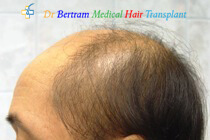
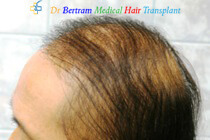
For advanced loss (Class V-VII), strategy depends on donor capacity and patient priorities.

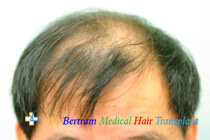
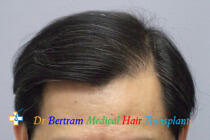
Norwood Class V-VI

  • Focus is often on creating a defined core of coverage in the central crown and mid-scalp, blending with existing hair.

  • A second session may be planned for added density.

Before
12 Months After
Before
12 Months After

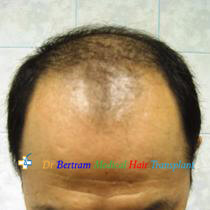
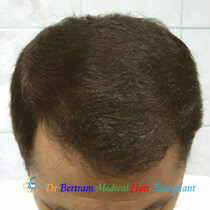
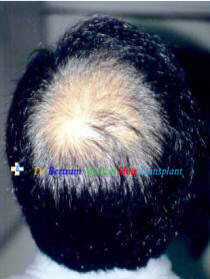
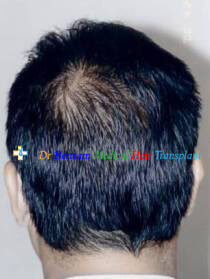
Norwood Class VII

  • With limited donor hair, the choice is often between optimizing the frontal frame or creating a centralized crown “oasis.”

  • Full coverage is typically not a realistic goal, and strategic prioritization is key.

Before
12 Months After
Before
12 Months After

Key Takeaways

  • Complex Restoration: Crown transplants require meticulous design of the natural whorl pattern and significant graft numbers for adequate coverage.

  • Candidacy is Stringent: Ideal candidates have a stable, defined bald spot and exceptional donor density, plus a commitment to medical maintenance therapy.

  • Medical Therapy is Non-Negotiable: Finasteride is strongly recommended to protect the long-term result and prevent further loss around the transplanted crown.

  • Part of a Master Plan: Crown work must be integrated into a life-long surgical and medical strategy, often prioritizing the frontal hairline first if donor hair is limited.

  • Health Correlation: Vertex baldness can be a clinical marker; discussing it with a physician provides an opportunity for broader health evaluation.

Ready to Assess Your Candidacy for Crown Restoration?

A crown transplant requires expert evaluation of your donor capacity and loss pattern. Send clear, top-down photos of your crown and donor area for a detailed graft estimate and strategic plan. Our surgical team will provide an honest assessment of what is achievable and how it integrates into your long-term hair restoration strategy.

36

MEDICAL - DISCLAIMERS

Images & Information shown are for reference only

Information on this website is provided for general educational purposes only and does not constitute personalized medical advice. It is not intended to promote our service or imply superiority over another.

Individual results in hair restoration vary significantly and no outcome can be guaranteed. The before-and-after images shown represent possible results — not promises. We recommend seeking independent medical advice to discuss your options … Read More

Pre-Consultation Review

Ensure You're a Good Candidate for hair transplant

Why pay for a consultation if you’re not a candidate? Start with our free WhatsApp assessment — the first step in our ‘No-Regret’ protocol to see if hair transplant is a realistic solution for your hair loss.

Still Have Questions ?

If you want to get a personalized answer from our medical team, you can reach us using this form here. We will cantact you as soon as possible.

Our Quality & Safety Standards

Our practice adheres to guidelines established by leading international organizations in Hair Restoration.

ISHRS

International Society of Hair Restoration Surgery is the leading global medical association that establishes international practice standards and patient safety protocols.

ABHRS

The American Board of Hair restoration Surgery represents the highest standard. To maintain rigorous certification requirements the physician must demonstrate surgical expertise.

WFI

Worls FUE InstituteI serves as the premier educational body focused exclusively on Follicular Unit Extraction methodology. The institute ensures consistent application of safe FUE.

This site is registered on wpml.org as a development site. Switch to a production site key to remove this banner.