
Our Innovation – Key Area Transplant

FUE-HD offers Precision, Flexibility, and No Linear Scar

What is FUE ( Follicular Unit Excision ) ?

Last Updated: 6 Nov 2025

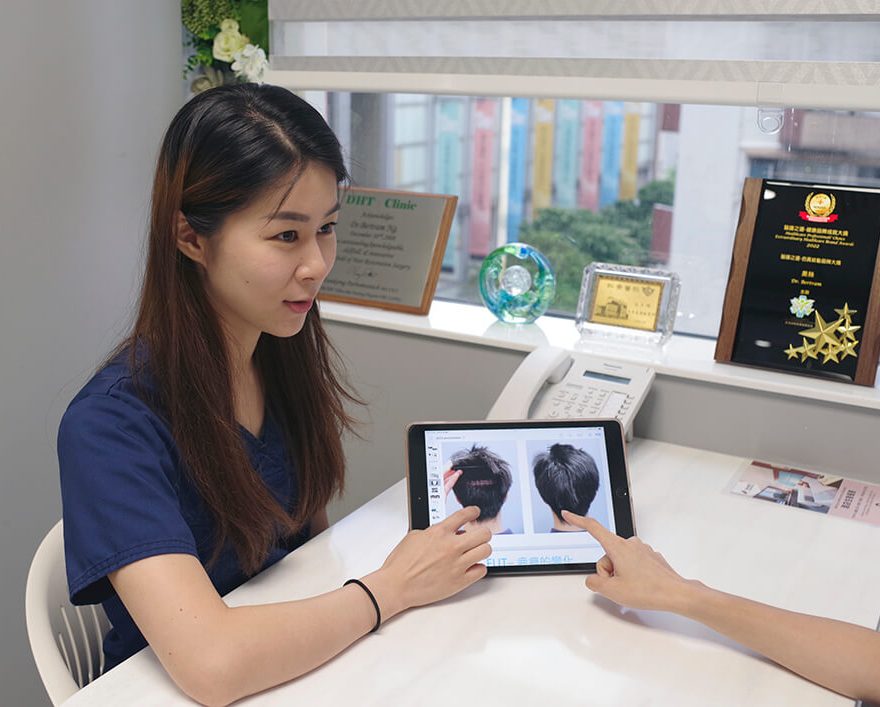
Hair transplant surgery involves extracting healthy hair follicles from a donor area ( usually the back of the head ) and relocating them to areas of thinning or balding. FUE is a minimally invasive hair transplant technique where individual hair follicles are extracted one by one from the donor area using a small, circular punch. This method requires no linear incision or stitches.

FUE-HD is our innovative approach with the objective to minimize graft damage and donor depletion. In recent years many centers advoate long hair FUE and Non-Shaved FUE. Each technique has its advantages and disadvantages.

What are the Advantages of FUE ?

  • No linear scar; leaves only tiny, dot-like scars.
  • Faster initial healing time compared to FUT.
  • Suitability for shorter hairstyles.
  • Application in eyebrow, beard, and body hair restoration.

Who Are Suitable Candidates for FUE ?

  • Men and women with pattern hair loss
  • Individuals with adequate donor hair
  • Those who prefer to wear short hairstyles
  • Patients seeking to avoid a linear scar from traditional strip surgery
  • Those needing eyebrowbeard, or scar correction.

Content-index

Drawbacks of Traditional FUE

The 1st Generation FUE was introduced as an alternative to strip harvesting in FUT. Follicular units were directly punched out one-by-one from the donor scalp. It is a modification of the old school Punch Graft used by Dr Orentrich, except a 0.8 to 1.0-mm diameter smaller punch was used instead of a 4mm biopsy punch.

What are the Disadvantages of Traditional FUE ?

1.    Limited Number of Grafts unable to achieve High Density Grafting
2.   Risk of graft transection (damage) during extraction.
3.    Unsightly Donor Areas ( Dotting, Thinning, and Mottling ) if overharvesting
4.    Long Surgery Time and Slow Recovery
5.    Expensive
6.    Potential for over-harvesting in the donor area

FUE Technique Variations

To overcome the above drawbacks, various technical modifications were developed over time. Each emphasizes on the various aspects :

  1. Variations in instrumentation
  2. Different approaches to donor area management
  3. Various graft implanting techniques
  4. Adjuvant medical therapies

Our FUE-HD Approach

FUE-HD is one of such technique variations to overcome the drawbacks of traditional FUE.  “HD” stands for High Density. We combined and modified the European and USA FUE techniques to accommodate for high density implantation. The incisons are smaller with less bleeding and trauma to the recipient site. This markedly reduces the downtime, and patients can resume normal activities just after a few days. Our system also combines the latest bio-technology.

FUE-HD : 7 Technical Features

1. Wide-Mouth 0.8mm Punch

Graft transection is the main drawback in FUE. In 2017 a new punch 0.8mm in diameter was developed with a wider opening in the shape of a funnel. This punch design reduces transection of the follicle during harvesting especially in Asians with thicker and longer hair follicles.

Why Not 0.7mm ?

A smaller punch would leave even a smaller graft but at the expense of getting lesser stem cells for rejunveration.

2. Manual-Automatic Systems Combined

After learning Dr John Cole ( USA ) CIT System, Dr Umar ( USA ) U-System, Dr Devroye ( Belgium ) WAW System, Dr Trivellini ( Italy ) Mamba Device, and many other technique and devices in the last 14 years, we feel that the human touch is as important as any latest technology.

We combine both manual and automatic extraction to cater for different skin texture and hair characters.

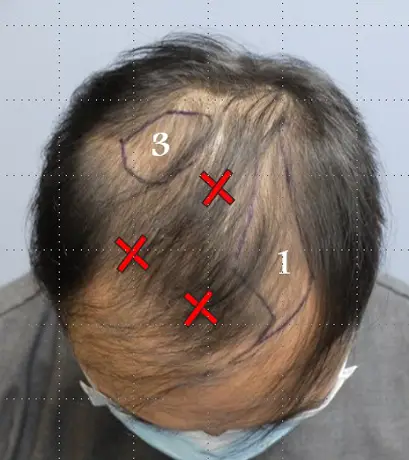
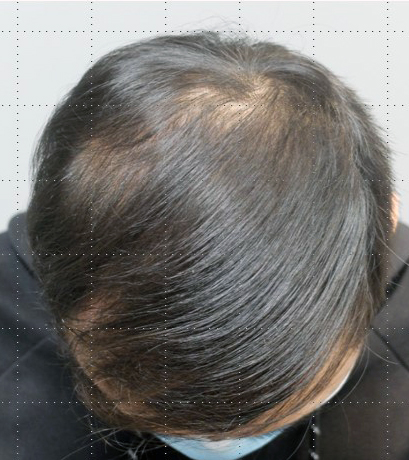
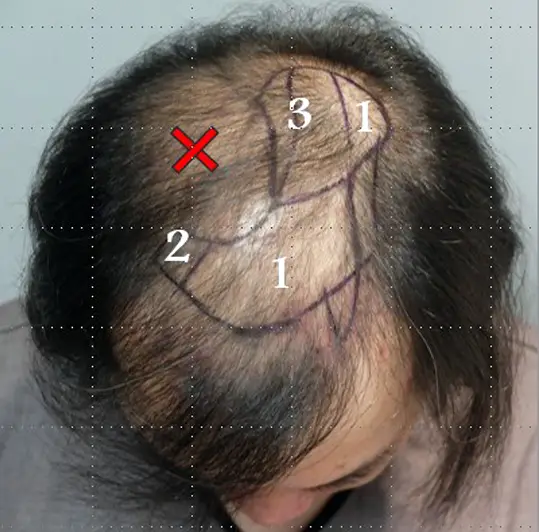
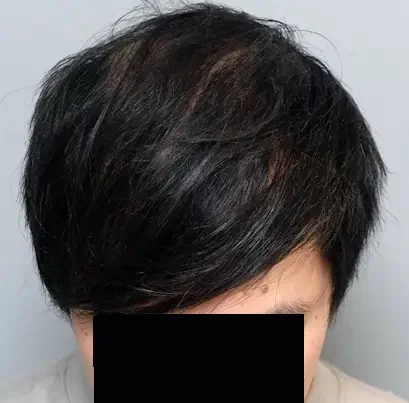
3. Key Areas Transplant

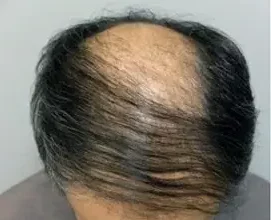
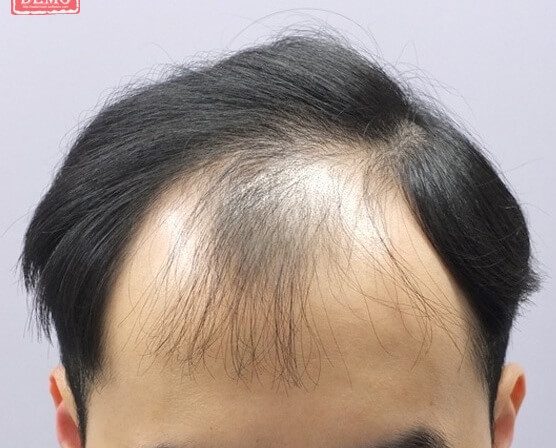
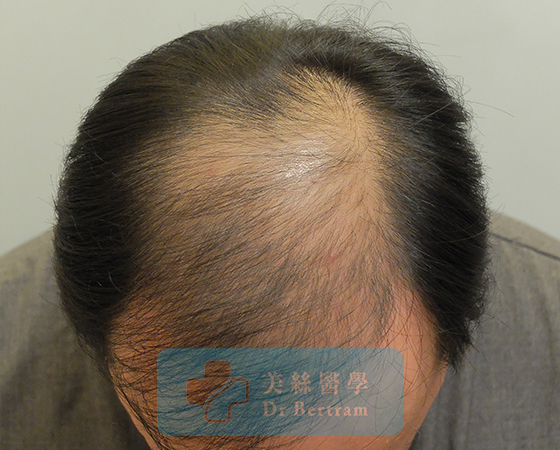
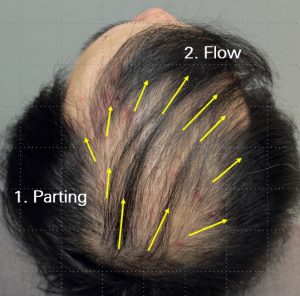
Patients might not have enough donor hairs to cover all balding scalp. We overcome this common problem by implanting good hairs along the hairline and parting side only. These hairs can be combed over to allow for a larger area coverage without exhausting all donor resources. Patients can always return for a second procedure to extend the coverage. Results in Class V to VI are impressive.

This innovation is called “Key Area Transplant”. We first presented this approach in 2010 ISHRS Annual Scientific Meeting in Bahama, and in 2025 CAHRS Meeting in China.


4. Sequential Extraction Technique

In 2018 we had developed a new technique using both hands for excision and extraction simutaneously to reduce the graft harvesting time. This so-called “Double Gun Technique” was first presented in the 2008 ISHRS Annual Scientific Meeting in Montreal, Canada,

In 2018 the ISHRS FUE Committee re-named it “Sequential FUE Technique”. Our technique is currently used by many doctors in Europe, and published in Dr Sam Lam’s FUE textbook.

In 2018, we presented our “Double Gun Technique” at the ISHRS Annual Scientific Meeting in Canada — a breakthrough method using both hands for simultaneous excision and extraction.

The ISHRS FUE Committee later renamed it “Sequential FUE Technique” and recognized us as the first in the world to describe it.

5. Partial-Stem Cell Graft Isolation

With our skill we are able to cut a 3 or 4-hair follicular unit longitudinally into 2 intact halves. One half is removed for re-implantation as usual, while the other left behind to regrow.

Studies had shown that the remnant can regenerate completely. This technique has the potential to generate two hair follicles from one follicle with consistent results and preserve the donor area.

6. No Touch Graft Insertion

Grafts outside the body has a limited survival time and must be implanted ASAP. We have abandoned the use of implanters as they produce more tissue trauma by squeezing the graft into a metal tube, and with a bigger wound.

Instead we use forceps to grasp the upper hair shaft. The graft is directly inserted into a snug-fit holes. This is a 1-step procedure without the need to touch the roots or to squeeze the follicle into a metal tube of an implanter. The incisons thus created are smaller, allowing for denser packing.

7. Integrating Latest Bio-technology

The final result of hair transplant depends on how many grafts actually re-grow after the procedure. Damaged hair follicles may not produce new hair. Our FUE -HD combines the followings to enhance graft survival :

•   ATP Energy Spray and Storage Solution
•   Low Level Laser Therapy
•   Tricomin Copper Peptide Hair Solution

The 3 Objectives of FUE-HD

Objective 1 - Natural Density with Long-Lasting Results

Our Grafts by Traditional FUE
Our Grafts by FUE -HD
More Viable Grafts = Fewer grafts needed for a Long Lasting Result at a Lesser Cost

When compared to traditional FUE, the FUE-HD further minimizes graft trauma thus delivers better quality of grafts and consistency in survival. Lesser grafts required also means a lesser cost.

The target is to harvest 2,500–5,500 hairs within 2–4 hours depending on donor density, followed by implantation within 2-3 hours. One-Day session is preferred to reduce risk and pain, and the additional trauma would disrupt blood supply. 

Objective 2 - Preserve Grafts for Future Sessions

Hair follicles are fragile and irreplaceable. Once depleted, they’re gone. Therefore they must be treated like mini-organs. The primary objective of FUE-HD is to reduces “ H-Factor ” ( human error ) and “ X-Factor ” ( unknowns risks ). 

Before The Future Comes

Even if hair cloning or cell multiplication are available in the future, it won’t be cheap. It is more practical to properly utilize your limited number of permanent hair follicles and avoid wastage.

Objective 3 - Minimize Donor Scarring

Better Healing

Scars happen, but smaller extraction punch leaves tidy and almost invisible scar. FUE-HD uses ultra-small 0.8mm punches and direct implantation to :

  • Create clean wounds that heal faster
  • Reduce inflammation and trauma
  • Allow patients to resume normal appearance within 1 week

Better Donor Zone Recovery

FUE-HD prevents patchy or moth-eaten donor sites by :

  • Using wide extraction zones to evenly distribute punches
  • Avoiding over-harvesting in any single area
  • Offering camouflage with Scalp Micropigmentation ( SMP ) if needed

Who Is FUE-HD Best Suited For?

FUE-HD is currently the technique used in over 85% of our hair restoration cases. It may be particularly suitable for the following situations:

1. Preference for a minimally invasive procedure

Unlike FUT, which involves a linear incision and sutures, FUE-HD uses small punch extractions without scalpels or stitches. This typically results in less post-operative discomfort and a shorter recovery period.

2. Short hairstyles

Patients who keep their hair very short (e.g., buzz cuts, fades, or cropped styles) often choose FUE-HD because the small extraction sites heal with minimal visible scarring, avoiding the linear scar associated with FUT.

3. History of poor scarring or keloid formation

The use of fine punches ( 0.8 mm ) in FUE-HD reduces tissue trauma and may lower the risk of noticeable scarring or keloid development, which can be important for individuals with sensitive or reactive skin.

4. Low donor density

In cases where donor hair is limited, FUT may leave a visible scar even when hair is worn long. FUE-HD distributes extractions more diffusely across the donor area, helping to preserve the natural appearance of the scalp.

5. Younger patients or those requiring smaller sessions

For younger individuals or those needing only a modest number of grafts (e.g., a few hundred), FUE-HD avoids the permanent linear scar of FUT. In select cases, the procedure can be performed without fully shaving the donor area.

6. Contraindications to FUT

Patients who have previously undergone strip surgery, or who have tight, thin, or scarred scalps that make FUT unsafe or impractical, may still be candidates for FUE-HD as an alternative approach.

Do I Have to Shave for FUE-HD ?

Partial Shave

Partial Shave - the next day
Partial Shave - 1 week after, quick recovery
  • Possible for under 2,000 Hairs
  • More hair can be extracted for female or those with high donor density
  • Keep at least 4cm of hair at the back of the head to cover the square slot

Full Shave

Day of Procedure, hair trimmed short
The look after a week
  • Usually required for large area transplant
  • Recommend to keep very short hair for 1-2 weeks before for the friends to get used to
  • We will trim it further on the day of procedure
  • With smaller incisions, patients can resume normal activities after a few days.

FUE-HD Technical Summary

Preparation – Donor Hair Shaving
  • You may need to shave the donor area short or undercut to allow precision extraction using a micro-punch.
  • For partial shaving cases, our team will design the shaving zone to keep it discreet, especially for long-haired patients.
Number of Grafts Expected

In a typical FUE-HD session, we extract between 2,400 to 3,600 hairs, depending on donor hair density, scalp characteristics, and target area.

Patient Positioning
  • You will be asked to lie face down ( prone ) during donor harvesting.
  • The head may be gently repositioned to allow access to all zones.
  • This position is typically held for 1 to 1.5 hours during extraction.
  • A break is taken every 45-60 minutes
Local Anesthesia
  • We use Level I Conscious Sedation, combining ultra-fine local anesthetic injections with mild oral sedatives to ensure maximum comfort without grogginess.
  • Most patients sleep through the procedure.
Surgical Technique
  • 0.8 mm custom-designed punch, engineered to minimize trauma and reduce visible scarring.
  • Forceps-based graft direct insertion for greater control of angle, depth, and direction.
  • Single-day sessions only — ensuring that follicles are implanted promptly after extraction to preserve viability.
  • Gentle handling and controlled spacing to reduce trauma and maximize graft survival.
Why we do not perform 2-days procedures?
  • Repeated anesthesia injections increase risk and pain
    Additional trauma disrupts blood supply, threatening graft survival
  • Implants on Day 1 may be damaged during Day 2 extractions
  • Lying face down two days in a row causes undue fatigue
  • Graft counts are harder to control on Day 2
Graft Preparation
  • Each graft is carefully extracted with minimal manipulation and immediately prepared for insertion.
  • Grafts are stored in Lyposomal ATP Solution to preserve stem cell integrity and enhancing growth rate.
Surgical Time
  • Extraction : 2–4 hours
  • Implantation : ~2 hours
  • Total procedure time : 5–6 hours in most cases completed same day
Wound Care
  • No stitches are required. The tiny 0.8 mm punch holes heal naturally and quickly.
  • Dressing is worn only overnight.
  • Swelling is rare, and most patients return to light activities within 2–3 days.
  • Thanks to strict infection control, no routine antibiotics are required.
  • Any minor discomfort in the donor area usually resolves within a few days.
36

conditions of use

Medical Disclaimer

Information provided on this website is for educational purposes only and is not intended as medical advice. It should not be interpreted as promotional material or as claims of superiority over other techniques or providers.

Individual results may vary, and no outcome can be guaranteed. Always consult with a qualified healthcare professional before making any decisions about medical treatment.

Paragraph

Pre-Consultation Review

Ensure You're a Good Candidate for hair transplant

Why pay for a consultation if you’re not a candidate? Start with our free WhatsApp assessment — the first step in our ‘No-Regret’ protocol to see if hair transplant is a realistic solution for your hair loss.

Still Have Questions ?

If you want to get a personalized answer from our medical team, you can reach us using this form here. We will cantact you as soon as possible.

Our Quality & Safety Standards

Our practice adheres to guidelines established by leading international organizations in Hair Restoration.

ISHRS

International Society of Hair Restoration Surgery is the leading global medical association that establishes international practice standards and patient safety protocols.

ABHRS

The American Board of Hair restoration Surgery represents the highest standard. To maintain rigorous certification requirements the physician must demonstrate surgical expertise.

WFI

Worls FUE InstituteI serves as the premier educational body focused exclusively on Follicular Unit Extraction methodology. The institute ensures consistent application of safe FUE.

This site is registered on wpml.org as a development site. Switch to a production site key to remove this banner.