
Regret 3 – Unsightly Donor Scar

All Hair Transplants Leave Scars — That’s a Medical Fact

There is no Scarless Hair Transplant!

Last Updated: 6 Nov 2025

Sara’s Comment

Despite what some advertisements claim, no hair transplant procedure is truly scar-free. Whether FUE or FUT, any removal of hair-bearing skin will leave behind small wounds — and all wounds heal with some form of scar. The key difference lies in how visible that scar is, how well it heals, and how it’s managed.
Quick Navigation

No Regret ! Compare Our FUE Scar

Scarring in FUE: Managing Expectations with Science and Precision

All surgical procedures involving the skin—including Follicular Unit Extraction (FUE)—create wounds, and all wounds heal with some degree of scarring. This is a biological reality, not a flaw in technique. What can be controlled—and significantly improved—are the size, visibility, distribution, and healing quality of those scars.

At our clinic, we take a holistic, precision-driven approach to FUE that goes beyond simply extracting grafts. Our goal is not just to harvest hair—but to do so in a way that respects the biology of the scalp, minimizes trauma, and supports long-term donor area health.

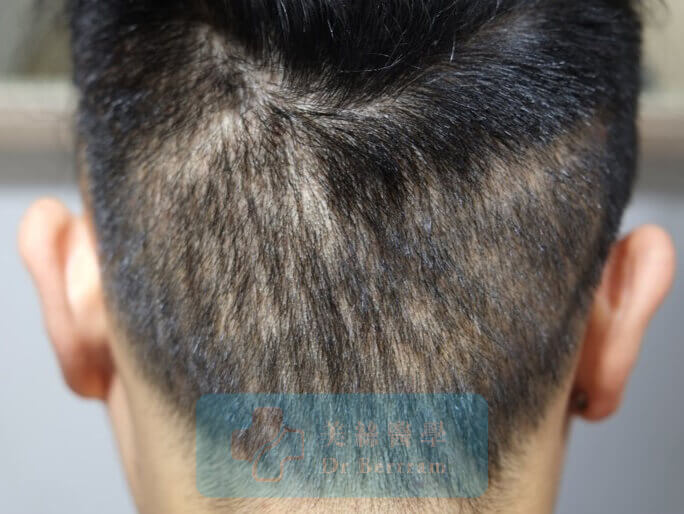
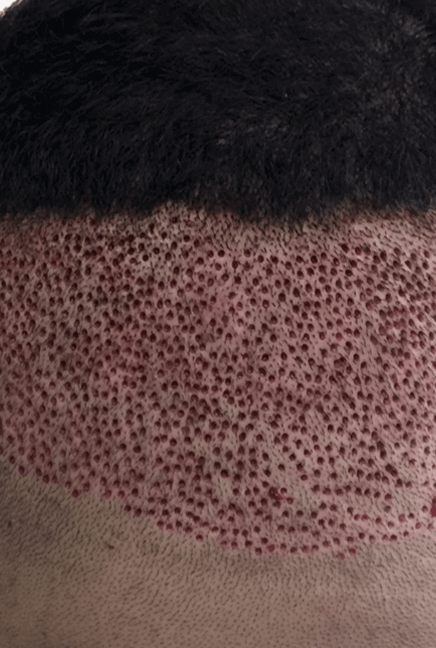
Punch Holes after FUE ( Other Center )
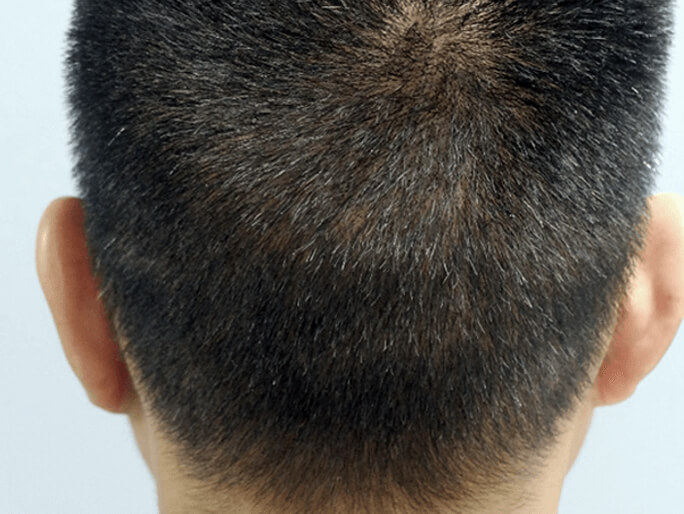
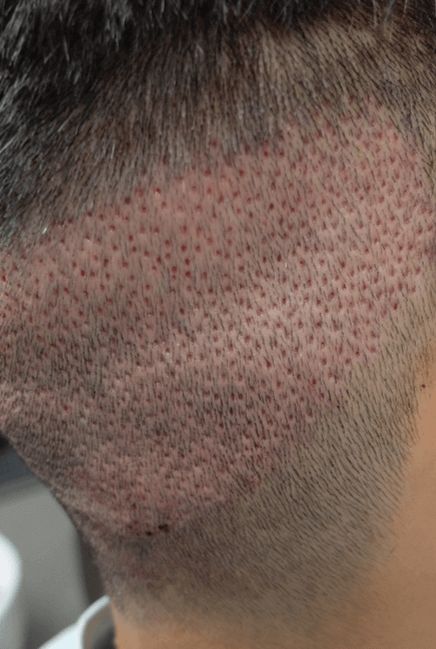
Punch Holes after our FUE - HD

Key Principles Guiding Our FUE Donor Management

  1. Judicious Graft Harvesting
    We never over-harvest. Every extraction plan begins with a detailed pre-operative assessment to determine the exact number of grafts needed for natural, lasting results—avoiding unnecessary depletion of the donor supply.

  2. Strategic Graft Spacing
    To prevent clustering and visible thinning, we avoid extracting adjacent follicles. Instead, we use wide-area donor mapping across the safe donor zone (including occipital, temporal, and even nape regions when appropriate), ensuring extractions are evenly distributed and invisible to the naked eye—even in short hairstyles.

  3. Preservation of Regenerative Potential
    In select cases, we employ partial graft extraction techniques that intentionally leave behind portions of the dermal sheath and stem cell-rich niche. Emerging evidence suggests this may support limited regrowth in the donor area, preserving future options.

  4. Minimizing Tissue Trauma

    • Ultra-fine 0.8 mm punches reduce epidermal and dermal damage
    • Precision depth control lowers the risk of graft transection (accidental cutting of follicles)
    • Gentle extraction protocols minimize bleeding and tissue disruption

  5. Infection & Complication Prevention
    Strict aseptic technique, minimal session duration, and careful patient selection (e.g., excluding those with poor wound healing or active scalp conditions) help reduce infection risk and promote optimal recovery.

  6. Advanced Post-Operative Healing Support
    Immediately after extraction, the donor area is treated with our specially formulated healing oil, enriched with anti-inflammatory botanicals, antioxidants, and lipids that support barrier repair.
    This is followed by a structured recovery protocol including:

    • Low-Level Laser Therapy (LLLT) to stimulate cellular repair
    • Topical copper peptides to enhance collagen remodeling and reduce scar formation
    • Clear aftercare instructions to keep the area clean, moisturized, and protected
Donor Area after FUE ( Other Center )
Donor Area after our FUE - HD

The Result? Minimal, Dispersed Scars — Not “No Scars”

We invite you to compare our FUE-HD ( High-Definition ) donor outcomes : tiny, hypopigmented dots that blend seamlessly into surrounding skin, invisible beyond arm’s length, and often undetectable even with hair clipped to a #1 guard.

But more importantly, we prioritize long-term scalp integrity — because true excellence in hair restoration isn’t just about what you transplant today, but how well your donor area heals tomorrow.

Transparency is part of our standard. We don’t promise “scarless” surgery — that would be misleading. Instead, we offer science-backed, ethically practiced FUE that minimizes scarring while maximizing both aesthetic results and patient safety.

White Dots after FUE ( Other Center )
Smaller Spots after our FUE - HD

No Regret ! Compare Our FUT Scar

Comparing FUT Scars in the Same Patient

This patient had the first hair transplant in another reputable center. He came to us for second procedure.

  • As first donor scar was very wide we decided to make another incision just below.
  • Our second scar was smaller than the first one, thanks to the various techniques we were using.


Result

(B) Scar from another center ( 1st procedure )
(A) Our FUT scar ( After 2nd procedure)

Check Our FUT Scars

Below : Move the cursor sideway to see the scar exposed.

Before After
Before After
Before After
Before After
Before After
Before After
Before After
Before After
Before After
Before After
Before After
Before After
Before After
Before After
Before After

As mentioned, we use a combination of advanced surgical techniques to reduce scarring and promote natural healing.

Technique 1 : Reduce Width of Strip

Our FUT Scar
Close-Up ( Almost Invisible )

Over the years hair transplant surgeons have tried many methods to achieve the “invisible” scar in the donor area. There are 4 common ways to minimize donor scar. Transection is the accidental damage to the hair follicle by sharp blade during harvesting and graft cutting. To survive, the mid-portion (contains stem cells) must be intact. To compensate for wasted graft a wider strip must be excised. The increase of few minimeter can make a big difference to the wound closing tension. Smaller strip means lesser scar, so we reduce strip size by :

•   Careful planning using less grafts for best result
•   Minimizing transection by combining different techniques

Technique 2 : Retention Suture

his technique create mechanical creep for tension free closure, and allows close approximation of wound edges. It has been used in abdominal surgery for decades. Dr Pathomvanich (Thailand) adopted the technique into donor wound closure. Satisfactory results have been observed in more than 1,000 cases. Stitches can be removed as early as day 5. No unsightly stitch marks were left in most cases. Even tight wound can be closed without tension. This technique leaves no buried stitches so there is less tissue reaction and better scar formation.

AfterCare of Donor Areas

Sutures should be kept long enough for proper healing. Forceful or jerky movement of the neck should be avoided for the first 4 weeks. Topical Silicone, Vitamin C preparation and steroid have all been advocated.

Technique 3 : Scar Reduction After FUT

3 techniques are available in our center to reduce size of scalp scar:
1. Scalp Micropigmentation
2. FUE-Grafting into scar
3. Excision and Re-Closure

The advance of Scalp Micropigmentation has made it the preferred choice in most cases. Also it changes our preference for hair transplant technique, when FUT making a return. The downside of FUT, the linear scar at the back of the head, can now be easily fixed by SMP, leaving the patients with the option of wearing skin head even after a FUT procedure.

36

conditions of use

Medical Disclaimer

Information provided on this website is for educational purposes only and is not intended as medical advice. It should not be interpreted as promotional material or as claims of superiority over other techniques or providers.

Individual results may vary, and no outcome can be guaranteed. Always consult with a qualified healthcare professional before making any decisions about medical treatment.

Pre-Consultation Review

Ensure You're a Good Candidate for hair transplant

Why pay for a consultation if you’re not a candidate? Start with our free WhatsApp assessment — the first step in our ‘No-Regret’ protocol to see if hair transplant is a realistic solution for your hair loss.

Still Have Questions ?

If you want to get a personalized answer from our medical team, you can reach us using this form here. We will cantact you as soon as possible.

Our Quality & Safety Standards

Our practice adheres to guidelines established by leading international organizations in Hair Restoration.

ISHRS

International Society of Hair Restoration Surgery is the leading global medical association that establishes international practice standards and patient safety protocols.

ABHRS

The American Board of Hair restoration Surgery represents the highest standard. To maintain rigorous certification requirements the physician must demonstrate surgical expertise.

WFI

Worls FUE InstituteI serves as the premier educational body focused exclusively on Follicular Unit Extraction methodology. The institute ensures consistent application of safe FUE.

This site is registered on wpml.org as a development site. Switch to a production site key to remove this banner.