
Hair Transplant Journey : A 32-Year-Old Man’s 12-Month Transformation from Class IVa
Home » What To Expect Next 12 Month – Case 2
For men with established androgenetic alopecia (e.g., Norwood Class IVa), a hair transplant provides permanent restoration to the frontal hairline and mid-scalp. The final result, however, is a process of biological growth that unfolds over a full year, requiring patience and realistic expectations through distinct phases of shedding and regrowth.
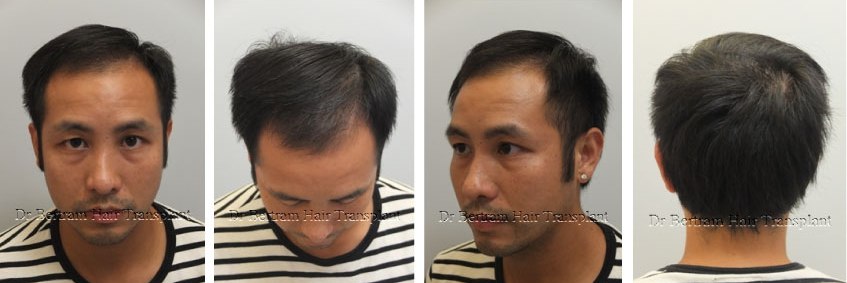
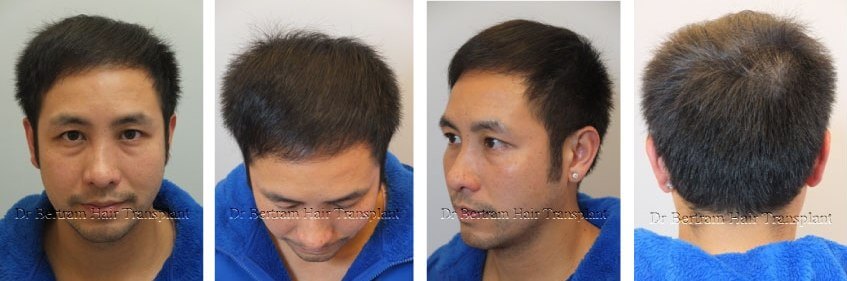
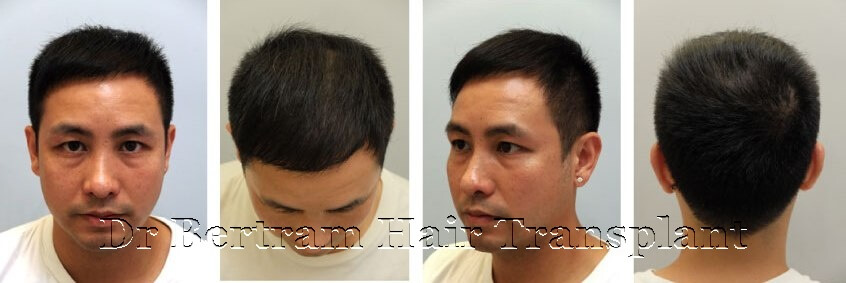
Here is a real case of our patient with Androgenetic Alopecia Class IVa who underwent the procedure at our clinic, highlighting the key stages from the initial surgery to the final results after 12 months.

This case documents the 12-month progression of a 32-year-old man with Norwood Class IVa androgenetic alopecia. It highlights the gradual transformation of hair transplant, demonstrating key stages from post-operative healing through the “ugly duckling” phase to final maturation. The outcome underscores the importance of strategic graft placement for frontal frame restoration and density, with adjuvant medical therapy for long-term stabilization.
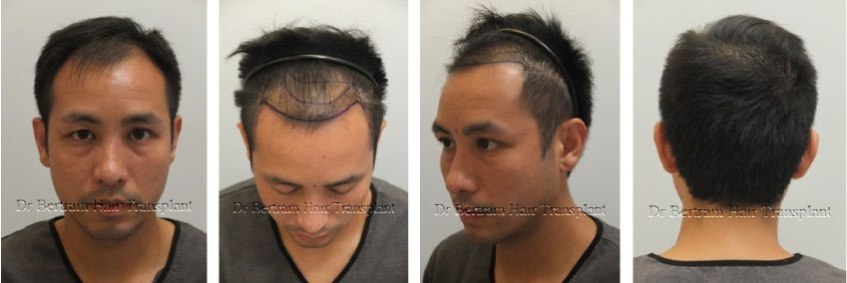
Patient : 32-year-old male
Norwood Classification : Stable Norwood Class IVa androgenetic alopecia.
Technique : Follicular Unit Transplantation (FUT) to maximize graft yield in a single session.
Follicular Unit Density : 85 FU/sq.cm
Hair to Follicular Unit Ratio : 1.8 : 1
No. of Grafts : 2,826 / No. of Hair : 5,052 – strategically placed to rebuild the frontal core and reinforce the existing thinning area.
Goal: Restore a natural, age-appropriate frontal hairline and increase density in the mid-scalp.
The patient’s journey followed the standard biological timeline, visualized through monthly progress markers.
In this case the patient opted for the Follicular Unit Transplantation ( FUT ) technique. During the initial consultation, our doctor assessed the extent of hair loss and the condition of the donor area, ensuring that the procedure would yield the best possible outcome. This stage was critical for planning a tailored approach to meet the patient’s specific needs and setting realistic expectations.
Month 0-1 (Post-Op & Healing): Immediate post-operative redness and scabbing. Transplanted hairs are secure, but the scalp is in healing mode. By week 10, most scabs have shed.
Month 1-4 (The “Ugly Duckling” Shedding Phase): Nearly all transplanted hairs shed—a normal and expected process. The scalp may temporarily appear similar to its pre-operative state, which can be psychologically challenging but is a standard part of the growth cycle.
Month 3-6 (Early Regrowth): Fine, new hairs begin to emerge sporadically. Initial growth is often thin and colorless. By month 6, visible coverage and the new hairline definition become apparent, marking a turning point in the transformation.
Month 6-9 (Active Growth & Thickening): Hairs enter a rapid growth phase, gaining length, pigment, and calibre. Density improves significantly, and the patient gains styling flexibility.
Month 9-12 (Maturation & Final Result): Hair texture coarsens to match native hair. Growth synchronizes, and by month 12, the result is considered mature and stable. The frontal frame is fully restored with natural density.
This case illustrates core principles of modern hair restoration for pattern loss.
Strategic Focus: Grafts were prioritized for the frontal core—the most impactful area for facial framing—rather than attempting lower-density coverage over the entire scalp.
The Importance of Stability: Surgery was performed on stable, not rapidly progressing, hair loss, allowing for predictable planning.
Adjuvant Therapy: To protect non-transplanted hair from future loss, the patient was maintained on medical therapy (e.g., finasteride/minoxidil), which is critical for long-term success.
The shedding of transplanted hairs (shock loss) is frequently misunderstood.
Biological Cause: The trauma of transplantation temporarily accelerates the hair’s telogen (resting) phase, causing the shaft to fall out. The living follicle remains beneath the skin.
A Positive Sign: This shedding often indicates the follicle is healthy and proceeding into a new growth cycle. Lack of shedding is not necessarily indicative of better survival.
Transformation is a 12-Month Process: Full, mature results are only visible at the one-year mark, requiring patience through a phased timeline.
Shedding is Mandatory, Not Optional: The “ugly duckling” phase (months 1-3) where transplanted hairs fall out is a normal, expected stage and not a sign of graft failure.
Frontal Frame Restoration is Key: For Class IVa loss, strategically restoring the frontal hairline and core provides the most significant cosmetic impact.
Surgery Addresses Past Loss, Medicine Manages Future Loss: A successful long-term outcome typically combines transplant surgery with ongoing medical therapy to stabilize progressive genetic hair loss.
Donor Area Management is Critical: The FUT (strip) method allowed for an optimal harvest of 2,800 grafts in one session while preserving the donor area for potential future needs.
Every case is unique. This patient’s journey illustrates what is possible with proper diagnosis and planning. To understand your own potential 12-month transformation, start by sending your photos for a free preliminary medical review. Our medical team will evaluate your pattern, donor hair, and stability to provide honest feedback on a personalized surgical plan.
Individual results vary. This case study represents one patient’s experience and is not a guarantee. Hair transplant involves surgical risks, and successful long-term outcomes often depend on concomitant medical therapy. A formal consultation is required.
Images & Information shown are for reference only
Information on this website is provided for general educational purposes only and does not constitute personalized medical advice. It is not intended to promote our service or imply superiority over another.
Individual results in hair restoration vary significantly and no outcome can be guaranteed. The before-and-after images shown represent possible results — not promises. We recommend seeking independent medical advice to discuss your options … Read More
Pre-Consultation Review
If you want to get a personalized answer from our medical team, you can reach us using this form here. We will cantact you as soon as possible.
Our practice adheres to guidelines established by leading international organizations in Hair Restoration.
International Society of Hair Restoration Surgery is the leading global medical association that establishes international practice standards and patient safety protocols.
The American Board of Hair restoration Surgery represents the highest standard. To maintain rigorous certification requirements the physician must demonstrate surgical expertise.
Worls FUE InstituteI serves as the premier educational body focused exclusively on Follicular Unit Extraction methodology. The institute ensures consistent application of safe FUE.