
The “Kappa” Hairline & Other Avoidable Mistakes – A Practical Guide
Home » Regret 1 – Unnatural Hair Transplant Results
Last Updated: 11 Nov 2025
The true goal of hair restoration isn’t just to add hair — it’s to restore confidence without drawing attention to the fact that you needed help at all.
A successful transplant should look so natural that even your barber doesn’t suspect a thing. A “No Regret” result means your hair remains undetectable — not just today, but for decades to come, as your face ages and your hairline evolves.
Yet all too often, patients end up with results that scream “transplant”—not from lack of hair, but from poor planning, rushed execution, or artistic misjudgment.
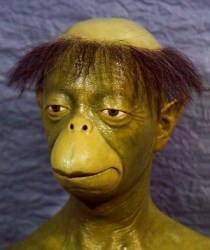
One haunting example comes from Japanese folklore : the Kappa, a mythical creature with a ring of hair encircling a bald, hollow crown. Tragically, this image has become a real-world warning for what happens when hair restoration ignores the future.
This guide explains how unnatural outcomes occur, why they’re often irreversible—and how to avoid them from the start.
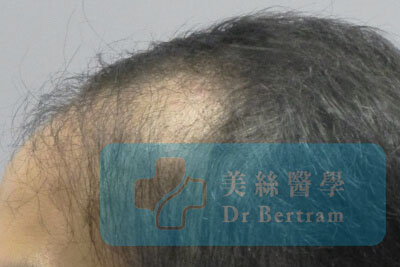
The “Kappa” effect, or “river-child” appearance, is a devastating complication of short-sighted planning.
A hairline is designed too low and too densely for a young patient with an unpredictable future pattern of hair loss.
As the patient continues to lose native hair behind the transplanted frontal rim, the donor supply is exhausted. They are left with an isolated, unnatural wall of hair at the front and permanent baldness behind it—the classic, irreversible “Kappa” silhouette.
A 2025 review of repair cases at Dr. Bertram Hair Transplant confirms that conservative, age-appropriate hairline design is the single most important factor in preventing this outcome. Our consultations prioritize a “lifetime plan” over satisfying a patient’s immediate, and often unrealistic, desire for a low juvenile hairline.
Beyond the “Kappa,” several other technical failures lead to clearly artificial results. These aren’t minor flaws — they’re red flags of clinics that prioritize speed and volume over artistry and biology.
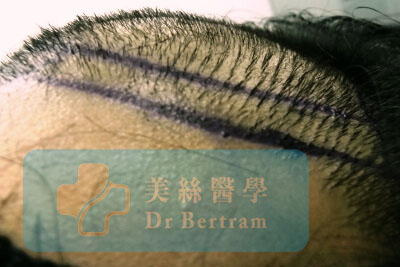
Caused by implanting multi-hair grafts in straight, orderly lines instead of mimicking nature’s random distribution.
Using grafts that are too large (mini-grafts) or placing them with incorrect angulation, making hairs stick straight out.
An unnaturally rigid and linear hairline that lacks the irregularity and softness of a natural hairline.
Grafts planted perpendicular to the scalp or growing in opposing directions, creating an unmanageable, chaotic appearance.
Demand for corrective procedures is rising — but hope must be tempered with realism.
Repair is not a reset button. It’s a complex salvage operation with hard limits:
In many cases, the only viable “repair” is camouflage — using medical therapy, SMP, or strategic styling to minimize the damage.
The hardest truth? Some mistakes cannot be undone.
An unnatural hair transplant isn’t just disappointing — it’s a daily reminder of a decision made without foresight.
The antidote lies in three pillars of the “No Regret” approach:
The most successful repair is the one that never needs to happen.
Choose wisely. Plan long. Transplant once.
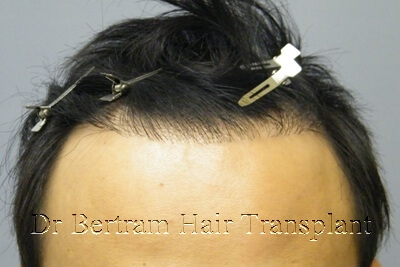
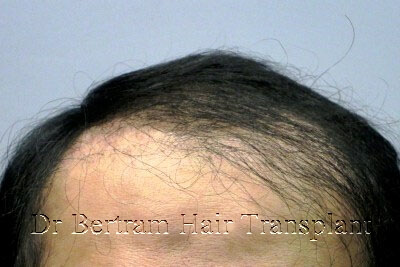
Problem: Reasonable position but unnaturally low density and a rigid, orderly design.
Repair Attempt: Randomly adding single-hair follicular units amongst the existing grafts to break up the line and add softness.
Problem: Reasonable position but unnaturally low density and a rigid, orderly design.
Repair Attempt: Randomly adding single-hair follicular units amongst the existing grafts to break up the line and add softness.
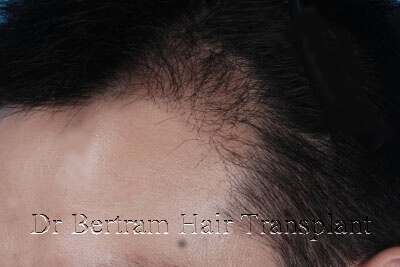
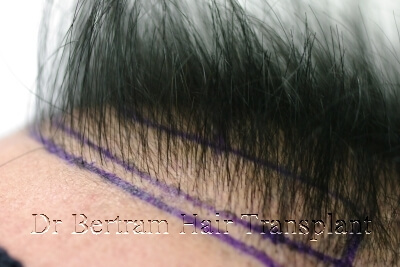
Problem: Obvious linear patterning from poorly implanted grafts.
Repair Attempt: Camouflaging by densely packing single-hair units in between the existing rows. This does not remove the old pattern but attempts to hide it.
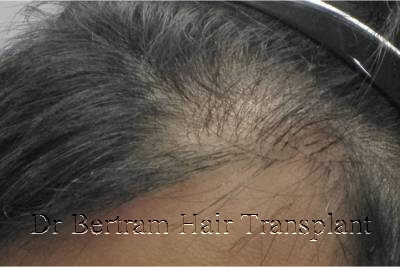
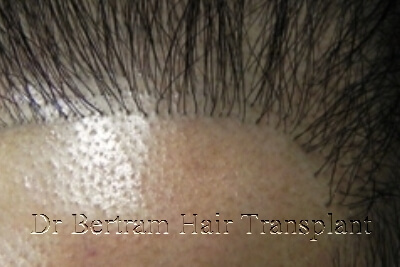
Problem: Grafts inserted at a perpendicular 90-degree angle, making styling impossible.
Repair Reality: No effective solution. This is a prime example of an error that is virtually impossible to fully correct, underscoring why getting it right the first time is non-negotiable.
An unnatural result is the ultimate “hair transplant regret.” It is a constant, visible reminder of a failed procedure. The principles to avoid this are clear: an experienced surgeon who understands the artistic nuances of the Asian hairline, a long-term strategic plan for your donor hair, and a clinic culture that values sustainable outcomes over simply fulfilling a patient’s initial request.
The most successful repair is the one that never has to be performed.
conditions of use
Information provided on this website is for educational purposes only and is not intended as medical advice. It should not be interpreted as promotional material or as claims of superiority over other techniques or providers.
Individual results may vary, and no outcome can be guaranteed. Always consult with a qualified healthcare professional before making any decisions about medical treatment.
Paragraph
Pre-Consultation Review
If you want to get a personalized answer from our medical team, you can reach us using this form here. We will cantact you as soon as possible.
Our practice adheres to guidelines established by leading international organizations in Hair Restoration.
International Society of Hair Restoration Surgery is the leading global medical association that establishes international practice standards and patient safety protocols.
The American Board of Hair restoration Surgery represents the highest standard. To maintain rigorous certification requirements the physician must demonstrate surgical expertise.
Worls FUE InstituteI serves as the premier educational body focused exclusively on Follicular Unit Extraction methodology. The institute ensures consistent application of safe FUE.